The President Speaks: President’s Day

I greet you my fellow Americans on this holiday that merges the birthdays of our two most famous presidents.

What is interesting is that one president owned slaves while the other freed them. One was born with good connections, making better use of them than anyone expected, while the other, of humble origins, believed in then achieved the American dream.

Each of these men sacrificed for his country. One commanded and led an army, risking death continually to create a new nation. The other also commanded an army, seeking to preserve what the first president helped create.

As cynical as our times are, we must not lose sight of their greatness. Washington wanted no compensation for all of his time and the risks he took.

Lincoln, perhaps not pure in his decision to free slaves, was pure in his conviction that Americans show no animosity to each other after the war. He was a healer in the spiritual meaning of the word.

It is this spirituality that made America great. Washington could not have done so much for free without the religious values Puritans brought to the continent. Lincoln could not have dreamed of being president and also of doing something great for humanity without his unshakeable faith in God and the knowledge that he could turn to The Bible for inspiration, wisdom and catharsis.

This is important, for when people say there must be a separation of church and state, they usually mean religion is dangerous and should not influence politics. That isn’t how our Founding Fathers saw it, how Puritans saw it or how Lincoln saw it.

The Puritans, who I admit were highly opinionated, believed that politics ruins religion more than religion ruins politics. They believed people should live their lives exemplifying the best in religious principles, and that they ought to religiously watch and act to prevent government from dictating what moral principles will be followed.

Our Founding Fathers admired the Puritans. They knew it was the Puritans who provided the spark for liberty the patriots inflamed, and they knew the spark for liberty came from religion not politics.

What the Founding Fathers may not have known is that the fire that burned so bright in the Puritans was fed by belief in the Second Coming, that the patriots were using the energy from that conviction to start a rebellion and create a nation.

It was this nation Lincoln felt he had to save. He knew the nation’s principles were not created by men but by God. Lincoln knew too that he was serving God and giving a new life to those who had been denied by men the freedom God gave them at birth.

In our cynical times we look past lofty principles. We look for hypocrisy.

We say Washington owned slaves so he does not deserve respect and cannot possibly be a hero. We say Lincoln originally felt black men to be inferior, so his first thought must diminish his decisions to free slaves and reunite the nation.

My countrymen, our cynicism makes us an unhappy and uninspiring country. Our lust to label someone a hypocrite reveals how little we believe in ourselves and how naive we are not to realize that greatness and goodness are not going to be perfect.

Our hypocrisy watch also shows the world how foolish we are. We would rather blindly reject a hero because of his bad points, than blindly assume our hero could do no wrong.

With this attitude we cannot be great again. We need heroes to inspire us so we can make the changes America needs to make.

Two changes are to stop suing and stop being promiscuous. These acts could lay the grouondwork for truly heroic acts like opposing the Patriot Act and our police state.

We feel we have the right to sue. We think we are free when all barriers are dropped in our sex lives. Unfortuneately, this self-centeredness keeps us from worrying about freedoms far greater than these: such as not being watched by police and having no fear of being arrested for something we said or something we might do.

There is nothing heroic about lusting for a lawsuit or the seduction of strangers. There is everything heroic about complaining police have too much power and laws need to change so we cannot be arrested for our opinion or our appearance.

Most Americans have no position of power to do something like Washington or Lincoln did. Yet as a nation, if we have courage and wisdom we can act heroically.

A characteristic Washington and Lincoln had to complement their ambition and vision is restraint. Our nation has ambition but no vision. Most importantly we have no restraint.

It is our lack of restraint that makes us cynical of true heroes. It is the lack of restraint that makes us glorify false heroes.

We need to stop being slaves to our worst passions. We need to seek once again to be a free people, to risk our lives for the freedom God gave us.

We must honor our greatest heroes. We must fight for and exemplify true freedom. We must be the shining star for our grand children that the Puritans were for the Founding Fathers and the Founding Fathers were for Lincoln.

Copyright © 2025 by David Vaszko
Catalpas

“It’s a great name isn’t it?” I told him.

“What?” he asked.

“Catalpa.”

“Are those the one’s with the gray underside of the leaves that flutter when it’s windy?” he asked.

“You’re probably thinking of Cottonwoods and Poplars,” I said. “Cottonwoods grow along both rivers. There were beautiful Poplars outside the theater building at Sac State. I loved to watch their shadows on the wall in winter when the leaves were gone.”

“Where are Catalpas?” he asked.

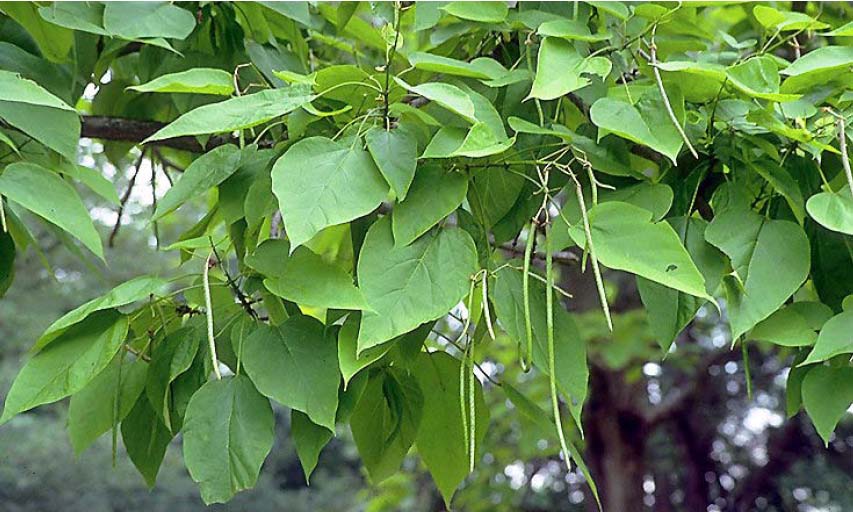
“They’re scattered around,” I said. “There’s one at the theater in William Land Park. If you’re sitting in the back look over to the right toward the beautiful garden. It’s on the other side of the pine tree. You can tell by their big heart shaped leaves and the long pods that get hard and brown in Autumn. In Spring they have white bell shaped flowers, but the flowers only last a month. You can easily miss them. You can’t miss the leaves or pods though, the way they hang and droop. Their hanging and droopiness fit our hot summer days.”

So that’s why you like the name,” he said.

“Yes,” I replied. “It’s lazy and lingering like the leaves and pods and our summers. They droop closer to the ground than most trees. I like to walk under the tree brushing the leaves away to lie in the shade.”

“How come there aren’t more of them?” he asked.

“Well, they don’t grow tall,” I said. “Another reason is their long pods. I guess people felt the pods are a nuisance when they fall on the ground.”

“But people planted a lot of those trees with rough round balls that fall all over the place,” he said. “I lose my balance when I step on them. They’re not the best thing for my lawn mower either.”

“You’re thinking of Liquidamber,” I said. “People planted them because they grow so tall. Sycamores have balls too. They break a lot of times when people step on them. If Catalpas grew tall, we would have a lot more of them on the street and around public buildings. They are good for yards because they shade the house without people worrying about huge limbs or a giant trunk falling on the roof or a neighbor’s roof.

“They aren’t stately like Elms or Sycamores. Between the need for huge trees in the days before air-conditioning and our image of being strong and refined like our Midwest and East Coast background, Catalpas didn’t dominate.

“Their leaves are sensuous and erotic. If we plant Catalpas like old timers planted Elms, our city will have a different feel to it.

“I think of how relaxed I feel when I look at their leaves. Imagine how different we’d feel stepping outside to look at those big heart-shaped leaves waiting to be touched. They’d take the edge off of the stiffness of our houses and offices,” I said.

“Or maybe,” he replied, “when we looked at them we’d realize what kind of places we really have and how afraid we are to touch. Maybe we’d cut them down to plant Elms or Sycamores again.”

“Maybe you’re right,” I said. “Maybe feeling stately is more important to people than touching a leaf to satisfy or intensify a curiosity or a passion.

“Catalpas are great for children. Kids love to touch. The leaves and pods are right there for little people to grab. The pods and leaves seem huge to me. They must seem even bigger and more fascinating to children.

“I love wallking through the park at night in Fall. It’s the first time in months that sprinklers are not on. When I’m looking at the ground I stop when I see a huge Catalpa leaf in the light from the street light. I pick it up like a little kid and place it to my face.”

“Then what do you do?” he asked.

“I hold it to my heart. Then I kiss it and let it go.”

“You really kiss it?”

“Once in a while,” I said. “Sometimes nature makes me reverent. Think how different we would feel about our city if trees made us feel reverence. We probably wouldn’t brag about being the City of Trees. We might have an unspoken law that crimes are not committed where trees are. Think if we could wander along the rivers and hang out in our parks without fear. If we were fearless to match our love of trees, we would feel as beautiful as they are. Wouldn’t it be great to feel that beautiful? If we were not afraid of each other and if we were not afraid of ourself, then our trees would be different to us.”

“We would move slower,” he said. “And the word Catalpa would sound even better.”

Copyright © 2025 by David Vaszko

Courage to shine

In this age of fear,
Rise to the occasion.
Smile at strangers.
Put terror in the hearts of fascists who hate to see you loose, free, trusting, fearless.

Incite those who hate good will.
Say If you don’t smile at me, don’t lust for strangers’ eyes – you ain’t free. Do not destroy my shine.

You don’t shine Sacramento.
The great flag above our glorious capitol flies in vain.
You fear yourself, your neighbor, everyone, everything.

All the monuments in this park Sacramento. You disgrace them.
Those guys didn’t die so you could cower.

Get pissed off.
Say you are ill from having everything beautiful in you destroyed.
Say you realize the damage you do to the hearts of your fellow citizens when you fear them,
When you let them know their freedom and good will is not welcome.

Think about it Sactoh!
We destroy each others’s hearts.
It’s all on film –
Secure little you walking through huge solid doors at the capitol.
Little men, little women failing to attain greatness,
Eagerly saying oh yes we can’t be too scrutinized,
Afraid to say this is neither a great nation, a great state, a great city, or a great people.

What do you dream about?
I’ve never heard anyone say freedom is more important than money.
I’ve never seen anyone on the west steps in the sun reading Whitman, vowing to be godlike.
I’ve never heard anyone updating Thomas Paine saying
It’s unnatural to have security cameras everywhere. They must come down.
Those who put them up must be deposed. Are you with me!

You are filed with shame but for the wrong reasons.
You are meant to be beautiful America!
Sacramento! With your weather, your rivers, this grand capitol, these inspiring grounds
You should lead this nation on its’ path to being beautiful and free,
Of having the greatest men and greatest women that ever walked the earth.

We are an extraordinarily ugly people.
I dare you to be free.
Walk around the park.

Salivate over oranges and tangerines golden and sweet, with no edges.
Isn’t that a combination to strive for?

Sit on a bench under these magnolias, lusting over their sensuous roots,
Going mad with passion,
Promising to restore everything that’s been lost when you get home.

You need help. Go to Father Serra. Kneel. Confess your cowardice, your selfishness,
Your refusal to be true to America. Ask father to bless you,
So you dare to risk yourself to be free like he risked himself for others’ salvation.

Stop at the bathroom. Smell the disgusting homeless. Look at how ugly they are.
They personify the hearts of the people who run this country,
The people who love to see you weak and fearful. When you piss,
Tell yourself you’re releasing all the fear that makes you a little man.

After peeing, stop at the olive tree. It used to be the greatest tree in the park;
Just like we used to be the greatest nation and the greatest state.

See the bamboo. Watch its’ soothing light. Imagine how beautiful the jungle is.
How magnificent a jungle night must sound with crickets and all its’ tropical birds.

When you get to the Vietnam Memorial, think of young men screaming in quick sand,
reaching for their buddies hand; all so you could satisfy every selfish desire,
And give unquestioning assent to more cops and more jails.
Are you embarrassed? Ashamed? Have you ever told a young person patriotism is horseshit,
That if he can go to another country to murder,
He can’t complain when someone rapes his mother or girlfriend?

Peace. This is your greatest challenge! There are soothing black benches in this oasis from glory.
Feel their curve as fountain’s water soothes you and the overwhelming capitol imposes itself on you.
Make peace with yourself. Invite your former friends, telling them you apologize;
Begging them to apologize. Invite your friends. Tell them to ponder the noble white capitol,
The beauty and peace of these roses. Look at them.
Tell them you plan to make yourself free and beautiful,
To inspire other people to pull themselves and the nation out of darkness.
Tell them you love America, but this is no country for lovers and it kills you.
Smell roses with them. Ask them if they cry more as they get older.

As you wander to your next station, stop and look at the hydrangeas on 14th.
A great place to read in seclusion,
Arming yourself with courage to face the onslaught of conformity that makes America shameful.

Now you’re at the Korean War Memorial; the most profound of our monuments;
The cracked obelisk symbolizing the crack that began America’s decline.
But instead of photographs of the soldiers, imagine photographs of America’s prisons and prisoners,
Our lobbies filled with security guards, malls filled with bored kids,
Scared women hurrying white-faced to their car,
You looking at the ground because you fear to look at people because they worry you’re a
criminal, a rapist, and a pervert.
America hates crime but loves to live in fear.
You haven’t done a thing but you feel like shit don’t you?
All the space that this monument takes up used to be beautiful.

While you’re here and since it’s winter, look toward L Street.
You’ve got a clear view of the firefighter’s monument,
Our heroes who would hose you down the street if you questioned the Patriot Act.

Good thing there’s a God. Across the street is the Presbyterian church. Sit on the lawn.
Look at the palm trees. Ask yourself what God thinks of you.
All God wants is for you to feel free or godly or to suffer trying to be one or the other.
You suffer but you aren’t noble.

Look at those pigeons on the roof of the church. You feel peace when they whoosh away.
Wouldn’t you love to instill the same feeling in others as you move along the street
reflecting God’s beauty?

Be proud and humble. Stroll to the shiny white capitol.
Let yourself be stunned by its’ unembarrassed glorification of perfection.

Have the courage Socrates and Jesus did to believe in perfection; to be godly at work,
At home, and with strangers.

Kneel again. Ask God to help you be as great as your talent allows; so when you die,
You rise to heaven on grand clouds above the capitol, escorted by pigeons.

For now, walk to the west steps, your knees muddy. Take off your shoes,
Walk on the concrete. When your colleagues pass,
Force them to look at you after they turned away.
Tell them you never knew the burden of freedom that it means to be an American until today.
When they scoff, allow yourself to cry.
Think of how many times Socrates and Jesus cried over the corruption of their nation’s principles.

You’re almost finished. Go to 10th Street. Turn around. Look at the capitol in silence.
Now go to 9th Street and look at it. In front of you is a huge fountain.
On each side is a proud building.
One building has an inscription – Into the highlands of the mind let me go.
The other inscription reads – Send me men to match my mountains.

Put your shoes on.

It’s time to shine.

Even if it kills you.

Copyright © 2021 by David Vaszko