Cottonwoods in May

“What do you think pioneers thought about the cotton that Cottonwood trees release every year?” he asked.

“I think they worried about cholera and malaria so they did not think about it one way or the other,” I said. “If they had an allergy like I do, they probably weren’t as concerned about it because survival was so important. Something like an allergy was probably easy for them considering all they went through.

“After trees started being planted in the 1850s to replace all that had been cut down, we were leaving the pioneer stage. Then levees were built, the city raised and marshes drained. By 1857 we had grown astronomically. We were a real city.

“As we grew and we had more comforts, people began to complain about dripping sap and cotton puffs from Cottonwoods. The main reason they could complain was that trees they had planted to provide shade had grown quickly. The old part of town is on the flood plain. Soil then was fertile because of silt.

“I guess they didn’t want sap dripping on their buggies or cotton puffs blowing onto their porches and around their house. Now that survival was not as important, they could be picky. I guess the terms they would have used if they were alive today is that the dripping sap would cause their buggies to depreciate faster and cotton puffs blowing all over their porperty would bring its value down.

“But something I thought of now – their kids. The kids became adults in the seventies and eighties. Everyone knows the Pilgrims’ kids weren’t as tough as the Pilgrims. The same was true for the pioneers’ kids. They probably complained all the time of their allergy.

“A couple anti-cottonwood ordinances were passed: one in 1874, then one in 1896 as the city expanded.

“But you can bet there were people who didn’t care about sap on their buggy or cotton all over the place. They probably sat on the porch during May, whenever they had time, to watch the cotton puffs blow.

“They were grateful for having survived. They’d watch the puffs drift thinking of the floods, fires, malaria, cholera, violence and corruption they saw. Then they would dream about their kids, hoping the kids would do well and stay alive.

“There were probably days when a clump of tufts drifted all over them. They’d wait till it blew away from their eyes so they could watch more. They loved having it in their hair and all over their clothes. If the kids were still small or they had grandchildren, they’d invite the little ones over to play with the cotton and each other’s hair.

“Sometimes they’d get antsy and walk to the fence to lean on it, to watch all that white sailing into the blue. They’d gather up whoever was around to drive a little ways to lighten up and get giddy as they laid in the grass in its last little bit of green.”

“What about their allergies?” he asked.

“It’s a question of imagination,” I said. “I can accept the argument that there were so many Cottonwoods that new plantings were made illegal. In those days you could just walk a short way to the country or the river, depending on whether you lived on 12th or 4th Street. You could see Cottonwoods there.

“Sutter’s Fort had a lot of Cottonwoods. Imagine watching cotton puffs blow up against the walls and thinking just thirty years ago the fort was the center of activity in the wilderness. Imagine Sutter up at the Feather River in the Spring of 1850 watching cotton puffs drift, feeling an emptiness in his stomach that the charmed land he owned had blown away like a dream on a March cloud.

“What bothers me about people who say Cottonwoods bother their allergy is that they don’t look for the one or two days when the puffs don’t bother their nose, or at least not as much. On those days I wish they would shout for joy and say we are blessed to have these beautiful graceful things.

“You hear a lot about letting go. We’ve got to slow down when we have our allergies. We’ve got to let go for that month and deal with it, look to the sky and puffs and say it is worth it.

“The same with the dripping sap and eucalyptus bark and slippery pine needles and messy Autumn leaves.

“Every tree has its beauty and a lot of trees have their inconveniences.”

“What did the Indians do?” he asked.

“What did the Indians do?”

“Yes.”

“They danced a lot,” I said. “In February they had a dance for spring clover. In April they had a dance for spring flowers. In early Summer they danced for the first harvest. But as far as I know, they didn’t have a dance for Cottonwood puffs.

“A lot of people who like the cotton puffs think of the puffs as freee and symbols of freedom. So you could ask why people like the Indians who were so free didn’t celebrate their freedom with a religious dance to the cotton puffs.

“Indians took their freedom for granted. They probably didn’t know they had it till the pioneers took it away. It’s like us not appreciating our consumer stuff until we are broke or there is a power failure. You could ask why we don’t pray to blinking lights on radio or TV towers to thank them for the passion, inspiration, realization, love and resolve the great music of the world brings us.

“What was great about the Indians is they had a civilized life. They sat around a lot. They laughed. They talked. You can bet they spent a lot of time watching cotton puffs blow and loving every minute of it.

“When I watch cotton puffs I think of all the things I have never done, all the things I want to do, all my constructive passion I’m not releasing. I don’t think Indians had that problem.

“When I saw the film at the State Indian Museum, I loved listening to the women chant and seeing the panoramic views of our beautiful state. One of the things the narrator said was that the women sang these lovely songs while they were making baskets, that making baskets was a joy, not drudgery like factory work done by white people. Well, it would have been great to see cotton puffs drift along on the screen while the women sang and the Sierras were shot exquisitely.”

I stopped.

“You know the U.S. Bank building dowtown? The one next to the library?”

“Yes,” he said.

“There’s a set of murals in the lobby. They pay tribute to Sacramento based on the themes air, earth, fire and water. The one I love is air. It shows the confluence of the rivers with our skyline in the background. On the left are little boys blowing bubbles on a windy day. The trees are windswept. In the middle of the painting is a teenage girl leaning sensually with her back against a tree and her head and long hair thrown back where the trunk bends. She has her eyes closed dreaming while one of the boys is gawking at the big bubbles floating away.

“It’s a magical day, like the way I feel in May when wind blows cotton puffs.”

“There’s no cotton puffs in the painting,” he said.

“It doesn’t matter,” I said. “The painter understands Sacramento – the dreaminess and wind in April and May. Bubbles are more effective than if he used cotton puffs.

“Why did you ask me about them?”

“Because an old girl friend told me that when she was a few months pregnant she always went to the river to watch the cotton puffs.

I was afraid, she said. I’d sit with my feet in the water crying as I watched the cottony stuff drift. They scared me. They were free. I wasn’t. But they gave me hope because they were magical and beautiful.

“I didn’t know how to tell you so I mentioned the pioneers. I know you love the old days.”

“Did she love Sacramento?” I asked.

“No. She didn’t know the names of any of the trees either.”

Copyright © 2025 by David Vaszko

Catalpas

“It’s a great name isn’t it?” I told him.

“What?” he asked.

“Catalpa.”

“Are those the one’s with the gray underside of the leaves that flutter when it’s windy?” he asked.

“You’re probably thinking of Cottonwoods and Poplars,” I said. “Cottonwoods grow along both rivers. There were beautiful Poplars outside the theater building at Sac State. I loved to watch their shadows on the wall in winter when the leaves were gone.”

“Where are Catalpas?” he asked.

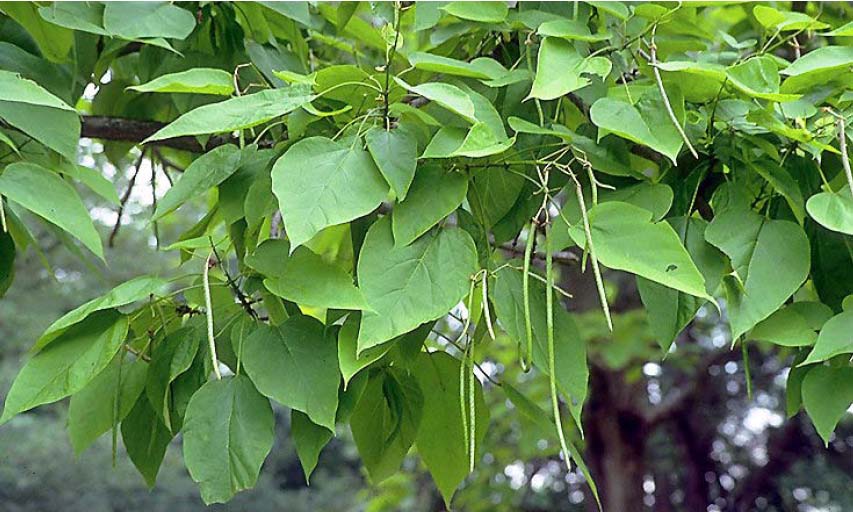
“They’re scattered around,” I said. “There’s one at the theater in William Land Park. If you’re sitting in the back look over to the right toward the beautiful garden. It’s on the other side of the pine tree. You can tell by their big heart shaped leaves and the long pods that get hard and brown in Autumn. In Spring they have white bell shaped flowers, but the flowers only last a month. You can easily miss them. You can’t miss the leaves or pods though, the way they hang and droop. Their hanging and droopiness fit our hot summer days.”

So that’s why you like the name,” he said.

“Yes,” I replied. “It’s lazy and lingering like the leaves and pods and our summers. They droop closer to the ground than most trees. I like to walk under the tree brushing the leaves away to lie in the shade.”

“How come there aren’t more of them?” he asked.

“Well, they don’t grow tall,” I said. “Another reason is their long pods. I guess people felt the pods are a nuisance when they fall on the ground.”

“But people planted a lot of those trees with rough round balls that fall all over the place,” he said. “I lose my balance when I step on them. They’re not the best thing for my lawn mower either.”

“You’re thinking of Liquidamber,” I said. “People planted them because they grow so tall. Sycamores have balls too. They break a lot of times when people step on them. If Catalpas grew tall, we would have a lot more of them on the street and around public buildings. They are good for yards because they shade the house without people worrying about huge limbs or a giant trunk falling on the roof or a neighbor’s roof.

“They aren’t stately like Elms or Sycamores. Between the need for huge trees in the days before air-conditioning and our image of being strong and refined like our Midwest and East Coast background, Catalpas didn’t dominate.

“Their leaves are sensuous and erotic. If we plant Catalpas like old timers planted Elms, our city will have a different feel to it.

“I think of how relaxed I feel when I look at their leaves. Imagine how different we’d feel stepping outside to look at those big heart-shaped leaves waiting to be touched. They’d take the edge off of the stiffness of our houses and offices,” I said.

“Or maybe,” he replied, “when we looked at them we’d realize what kind of places we really have and how afraid we are to touch. Maybe we’d cut them down to plant Elms or Sycamores again.”

“Maybe you’re right,” I said. “Maybe feeling stately is more important to people than touching a leaf to satisfy or intensify a curiosity or a passion.

“Catalpas are great for children. Kids love to touch. The leaves and pods are right there for little people to grab. The pods and leaves seem huge to me. They must seem even bigger and more fascinating to children.

“I love wallking through the park at night in Fall. It’s the first time in months that sprinklers are not on. When I’m looking at the ground I stop when I see a huge Catalpa leaf in the light from the street light. I pick it up like a little kid and place it to my face.”

“Then what do you do?” he asked.

“I hold it to my heart. Then I kiss it and let it go.”

“You really kiss it?”

“Once in a while,” I said. “Sometimes nature makes me reverent. Think how different we would feel about our city if trees made us feel reverence. We probably wouldn’t brag about being the City of Trees. We might have an unspoken law that crimes are not committed where trees are. Think if we could wander along the rivers and hang out in our parks without fear. If we were fearless to match our love of trees, we would feel as beautiful as they are. Wouldn’t it be great to feel that beautiful? If we were not afraid of each other and if we were not afraid of ourself, then our trees would be different to us.”

“We would move slower,” he said. “And the word Catalpa would sound even better.”

Copyright © 2025 by David Vaszko

Italian cypress

“It’s a tree people don’t talk about much,” I told him.

“What is?” he asked.

“Italian Cypress.”

“Aren’t those the trees that make the rows along the pathway from the east side of the capitol?”

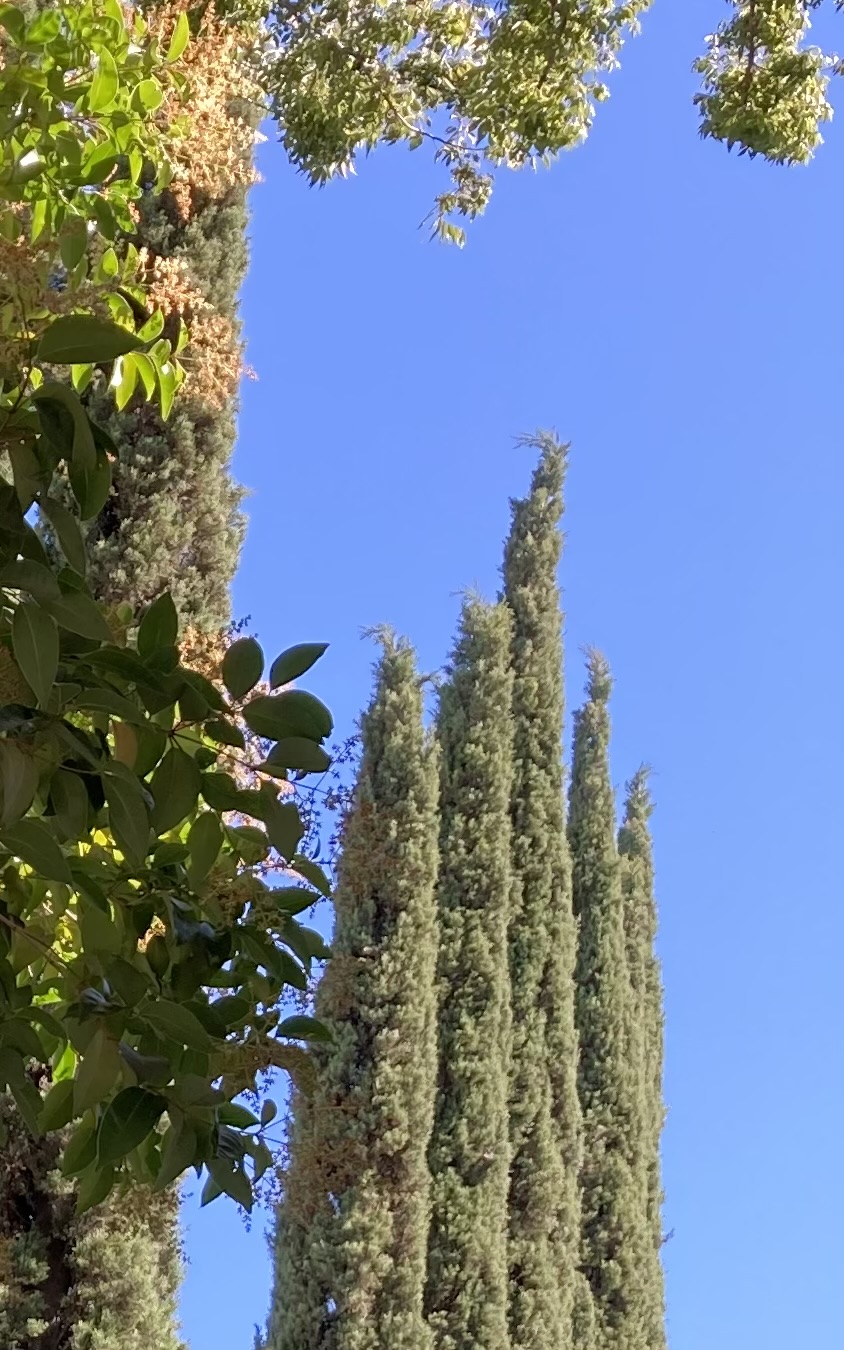
“No,” I said. “You’re thinking of Irish Yew. Yews are shorter and wider and have needles. Italian Cypress don’t have needles. They get pretty tall. They’re way taller than houses. In neighborhoods where there are not a lot of tall and branching trees, Italian Cypress really stand out, especially if it’s windy. When there’s a row of them with their tops blowing they do not get in each other’s way. You can watch each cypress drift in the wind or watch all of them at the same time.”

“Are there groves of them anywhere?” he asked.

“No,” I said. “They are planted in rows, one on each side of an entrance, or as an individual plant.

“You know where the stage is in William Land Park?”

“Yeah,” he said.

“If you’re where the benches are looking at the stage, there is an Irish yew behind the stage on the left. To the right of the yew are five Italian Cypress.

“There’s an Italian Cypress across the park along both the eighth and ninth fairway of the golf course. I love to stand in the eucalyptus and look at the lone Italian Cypress. Someday I might take up golf for the great view of beautiful trees lining the course. It would be a new perspective, kind of like being on the river looking to trees on the riverbank, or on a farm looking to trees on the property line.

“Italian Cypress fit our climate. We can watch them as we feel the heat and look to the mountains and imagine for a minute we’re in Italy.

“If you stop and think about it, we’re more of a multi-cultural city for our plants than our people. Our interest in each other has not kept up with our interest in each other’s plants.”

“Do you really like the cypress, or just appreciate them?” he asked.

“Both,” I said. “I know I love them. I think one of the reasons I love them is because tall narrow things like missiles, telephone poles and skyscrapers are ugly and lifeless. Italian Cypress are living things pointing toward the great beyond, either the unknown future as we keep growing, reaching for our modest heights, or the great big beautiful world I hope is up there when I die.”

He nodded.

“Anyway,” I continued, “Itallian Cypress are safe because you don’t have to worry about limbs breaking off and damaging somebody’s house. If the tree blows over, the foliage will probably cushion it from causing too much damage. That’s one of the reasons I’m suprised they aren’t talked about more.”

“But they don’t provide much shade,” he said.

“We need trees that are different than shade trees,” I said. “One of the reasons we plant shade trees is to sit under them to look out at the world. I like to sit in the shade looking into the light at the cypress. I watch the sky between them and their shadows on the ground.

“There are real tall ones which cast shadows on the wall of the theater on Broadway. It’s neat because there are also shadows from telephone poles and a humungous stalk from a century plant growing taller than the cypress.

“It’s interesting to look at their shadows on the big wall. They don’t move unless I stand there awhile. Then I go in to see the movie. All the changes flicker on the large screen. When I come out, if it’s still sunny I look at how much the shadows have changed, even though they are still.

“Didn’t Van Gogh paint Italian Cypress?” he asked.

“Something like it if not,” I said. “He saw movement in them and put the motion into his paintings. I think he literally saw them growing. I love the one where two people walk at night with a teeming cypress behind them.”

“We don’t walk much anymore,” he said. “We drive.”

“That’s true,” I replied. “With tinted windshields and sunglasses, the sky and trees become deeper and richer in color, more beautiful, more soothing. They make a drive exciting and the destination worthwhile.

“There’s some great Italian Cypress on 43rd Avenue east of the freeway. I love to see them as air blows on me from the sun roof and wind blows their tops. I love the noise gushing from the freeway and the brilliant sky spread beyond the river.”

Copyright © 2025 by David Vaszko

Eucalyptus

“I love the way you look at eucalyptus trees.” he said.

“What do you mean?” I asked.

“Well, you look like you are in a daze. You seem to be looking at more than a tree.”

“There’s something about them,” I replied, “that fascinates me, is mysterious to me. I have always liked to watch them blow, especcially the manna gums because they are billowy. They are neat in the rain going back and forth with water falling past them. But when the storm is over and fog sets in a few days later, the grayness of their leaves and the denseness of the blue gums depress me. I go from being exhilarated in a storm to being frightened in the fog. The motion of the storm makes me excited to be alive, to think of the future with confidence as I venture into the park with my umbrella, smiling as I look to the trees. In the fog the stillness gives me the heebee jeebees. Between the eerie fog and the looming trees and stillness, a lot of thoughts come to me that scare me. I don’t think of the future and how great it will be. I think of my weaknesses and fears, realizing I am not and will never be who and what I want to be.

“Tell me more about the way I look.”

“You look like you are glad they are here,” he said. “Almost everybody likes trees because they are pretty or they give shade. You look at them like you have a relationship with them. Almost like they are you or you are them.”

“I still get excited in the rain and scared in the fog,” I told him. “But some changes happened. I remember when I first saw aboriginal art or imitations of aboriginal art. Trees were made to have muscularity and sexuality. The term the crotch of the tree took on new meaning. When I’d see lush grass growing in the crotch of trees in winter and spring, especially American elms on T Street – the ones with the erotic twist – I’d laugh and shake my head.

“Where I used to see prettiness and bleakness, I saw power and sensuality. It doesn’t matter the time of year. Their power and sensuality is my even keel. I get less excited in the rain and less depressed in fog.

“A lot of trees are sensuous and look powerful, but the trunks of the eucalyptus, the way they twist and erupt from the ground are more powerful looking than others.

“This is an age when hardly anyone has power,” I continued, “yet we hear a lot of talk about feeling empowered. When I see the trunks of eucalyptus, especially the blue gums and mannas that were planted in the old days, I think of power, power, power. Not political power or ego power, but natural power I seldom let surge forth like I see surging through eucalyptus.

“That’s what I want – to feel naturally powerful and sensuous, to live my power and sensuality. We’re encouraged to be gaudy or plastic with our sexuality, not real or genuine with it.

“Remember the movie about the woman who played the piano who went to New Zealand to get married?”

He nodded.

“Remember when the white kids are playing on the eucalyptus stumps with the aboriginal kids? All the kids are humping them. The aboriginal parents are laughing as they watch their kids get sexual with the trees. The white guy gets angry seeing the white kids humping trees, so he makes them stop.

“Trees serve many purposes. That could be one of them for us, but we are afraid.”

“Wow,” he said.

“Yeah. It’s a great way for kids to get comfortable with their body and one another. I wish I had grown up like that.”

“Trees have brought up all your stuff. Haven’t they?” he said. “And not just in winter.”

“You’re right,” I admitted. “I love it. It’s not that the pain feels good. It’s that the trees bring up thoughts and feelings about myself and community, power and sex and relationships that give my life meaning and hope – that I will rise like a big rod of a eucalyptus, shedding my bark so my fear to be free gives way to my fear of what will happen if I don’t become free, especially as I get older.

“It’s interesting,” I said.

“What is?”

“These trees that are sexual and sensuous to me arrived in California in the 1850s. That was during the first third of the Victorian era, the era where people wore a lot of uncomfortable clothes and seldom expressed how they felt.

“We planted a lot of eucalyptus here in Sacramento to drain our standing water so there would not be as many mosquitos. People also thought trees would purify the air to protect us from malaria. Malaria means bad air in Italian.

“In 1877 during the heyday of the Victorian era, Sacramento planted 4000 eyucalyptus trees. That’s a lot of one species, especially in those days when our city was not big and we didn’t have gasoline powered augers to dig holes.

“It’s also interesting that at this time more and more elms were being planted. Elms would become our most loved tree, our unofficial tree, our connection to prestige and old school political power. They would be our major claim to be the City of Trees.

“It’s too bad nobody was moved by the unkemptness of the eucalyptus, their hanging foliage and long strips of peeling bar, to start a campaign to dress more loosely, to bare one’s body and soul, to erupt with genuine passion.

“They must have done for somebody then what they do for me. But they would not have been able to talk about it like I am. They could not tell people or write that trees make them horny and dying to talk about things they never talked about before – that society has everything backwards.

“It’s interesting that eucalyptus are so expressive, but their name comes from a word which means to conceal. Their seeds are concealed in a capsule. Just like our passion is bottled up.

“It’s interesting too, that the Victorian Age, as much as it created beautiful things, was a secretive age. Their art was stately and had character, but it was not expressive or seductive. At least seduction will let you in on the secret.

“That’s what is great about eucalyptus. They are expressive and seductive. I cannot think of anything as expressive as a eucalyptus tree, or so mysterious. They make me want to participate in the mystery, but I can only participate if I express. I want to express so bad because I want to participate in the mystery so bad.”

“You want to be seduced,” he said.

“Yes,” I replied. “It isn’t that I’m not assertive or aggressive. I will be more expressive and sensuous, mysterious and seductive, if I find something greater than me or you to be seduced by. It is a freedom we don’t cultivate or understand as a society.

“You’re probably thinking why I sound desperate and not free as I talk about something I love more than anything. The more I’m passionate about trees and their mystery and my expressiveness, the more I realize I’m not supposed to express sensuality or concentrate on pursuing and expressing what give my life meaning.

“It’s only partly that we aren’t supposed to say what we mean or express who we are or what we love. The greater part is that we’re supposed to be enthusiastic about an image based mainly upon money. We aren’t supposed to say what we mean, but just appear to mean something we don’t.

“Trees are freely expressing themselves. We feel we’ve gotten away with something by not revealing who we are. It’s the freedom to – freedom from controversey. Trees in the old days gave us freedom from the sun, but they didn’t make us feel free to relax and express ourselves, to shine like the sun for each other to marvel at and be warmed by.

“It’s too bad we don’t feel an affection for each other to match the love we feel for our trees. Wouldn’t it be great if the best thing about the City of Trees was the dialogues we had with each other in the shade of trees in the parking lot after work and while we planted trees together at parks and schools? At home we would look forward to talking over family business and intimacies under our trees.

“The reason trees are pretty much just something pretty and not a source of passion, conviction or intensity is because we’ve not only bottled up our passion; we’ve put our passion into false gods like money, career, property and image instead of into trees and other natural stuff.

“Our passion is our secret. We don’t know it’s there. When I see the eucalyptus trees twisting up from the ground I feel my passion bubbling, overflowing.”

“It sounds like you know it’s there,” he said, “but you don’t know what to do with it.”

“I don’t know how to express it,” I replied. “I was always told trees are just trees. They may be pretty, but they are still just trees. It’s difficult to express how I feel. It’s almost sacrilegious to.

“I think of the movie again, how the aboriginal kids were probably better able to express themselves and feel comfortable with themselves than the white kids. Think of how humuliated the white kids were. They’d never act spontaneously again. They’d fear to be laughed at if they were in a group, or punished. If they were alone they’d feel guilty about humping a tree or taking off their clothes in the forest. When they’d get home they wouldn’t tell nobody nothin’ or they’d lie if asked.”

He looked at me.

“We’re out of sync,” he said.

“I want to be in sync,” I said. “Eucalyptus became our unofficial state tree not because of our love for their beauty, but because people loooked upon them as a cash crop. It’s almost like the more we planted them to make money, the more out of sync we became. The faster and crazier and stiffer our movement, the less motion anmd fluidity and magic we saw in trees. I can tell I’m in synch the more I value trees for their expressiveness and sensuality, their power and vulnerability and sense of movement, then try to incorporate all of those into me, even though I feel awkward.

“They were planted all over – on eucalyptus farms, as property lines, as windbreaks, along train tracks. I have a theory about eucalyptus along train tracks.”

I looked at him.

“Go on ,” he said.

“Trains got rolling at the same time eucalyptus trees did. That was the 1860s. More trains came. More people came. More eucalyptus were planted for fuel for the trains and lumber to build with. But eucalyptus here didn’t work out as a building material. It wasn’t very good as fuel for trains. Eucalyptus weren’t planted as much after about 1910, but their groves remained. Trains didn’t go away either.

“I said a minute ago that our society became faster and crazier and more cumbersome in our movement at the same time we were planting more eucalyptus. Trains are a great symbol for the increased pace, the increased competition and the use of our bodies to work ourselves to death, at least spiritual death.”

“I think trains are neat,” he said.

“Me too,” I said.

“But there’s something about trains,” I continued, “that attracted people more than eucalyptus trees. People liked eucalyptus for their shade but not their sensuousness or twist or sense of motion. The trains though, were different. Trains made a lot of people money and were appreciated for that. Trains made an even greater number of people bitter. Trains broke farmers, railroad employees and helped break agricultural workers. All these broke bitter people had stiff bodies that hurt. Yet almost everybody agreed that trains sounded beautiful in the dark. There weren’t street lights in those days and people spent a lot more time outside.

“They’d listen, either living the moment as they looked to the stars or feeling in their stiff, broken, bitter, relatively young body that they’d overcome the pain and help their kids become successes. People without kids would look to the sky thanking their lucky star they didn’t have someone else to take care of. They’d wonder how long they’d hold up.

“People were mesmerized and soothed by the motion and sound and rhythm. It got them back in sync, at least as long as the trains passed, and especially at night when they run the most trains. I imagine couples would lie in bed too sore, pissed off and afraid to sleep, then snuggle for comfort when they heard a train.

“There’s the other side of trains too. When you’re outside and it rumbles by, a lot of passion rushes forth with it. You scream knowing you are going places and are going to thunder and be awesome. ‘ Yeah!’ ‘Yeah!’ ‘Yeah!’ I’ve screamed it so many times.

“You too?” I asked.

He nodded.

“They’re both about passion” I said.

“The lullaby and intensity?” he asked.

“That too,” I said. “I meant trains and eucalyptus. Trains were a romantic passion for me, a youthful passion. The passion I feel watching eucalyptus isn’t about me going places, but about expressing myself wherever I go or end up. Trains helped me get my rhythm. Eucalyptus challenge me to let myself loose.

“There’s a lot of places in the state where eucalyptus grow along the railroad tracks. I’m thinking of the peninsula and Watsonville. There’s a lot on the Amtrak runs between here and Emeryville”

“How about here?” he asked.

“Along Elvas, behind Hughes Stadium, at Sac State,” I said. “Sac State is a great place for trains. The echo is unbelievable. I loved to watch the gray engines come lurking out of the fog behind the gray eucalyptus. The problem is that a lot of the trees are being cut. In a few years they might be gone. There are replacement trees that will get just as big, but they won’t have the mystery.”

“Why are they being removed?” he asked.

“Either they’re too old or they died in the freeze in the early nineties. Maybe because they are so big and break so easy, they are considered too dangerous. The drought could have weakened them or killed them and made them vulnerable to borers. A lot of people don’t like the shedded bark from eucalyptus. Maybe the old big trees have so much litter, they just had to go.”

“Tell me about the borers,” he said.

“Well, one of the things eucalyptus lovers have liked about eucalyptus is that they are free from pests. That was pretty much true until the weather change of the 1970s. There were a lot of drought years in the seventies and eighties. Even though eucalyptus have done well in California because they are drought resistant, rain in winter is important.

“With so many years of drought, the sap – the gum – stops to flow because there is not enough water in the ground for the entire root system to produce the gum to flow to the trunk and branches. The borer takes advantage of this.

“A healty tree produces gum which prevents the borer from penetrating. The borer lays its eggs where the bark has stripped away on blue gums and mannas. So when drought comes and the trees become weak, borers have a field day. Scientists say you can hear them crunch the wood.

“It’s funny to think that eucalyptus were planted in Sacramento to drain our bogs, but we also wanted them because they would be drought resistant every summer after the bogs were drained.

“What isn’t funny is the double whammy of the freezes and droughts. Lots of damaged wood. It is a fire hazard. Remember that fire in the Oakland hills?”

He nodded.

“A lot of people who hated eucalyptus trees found an excuse with the fires to try to get eucalyptus removed and different trees planted. These people think eucalyptus are ugly and the bark a nuisance.

“Fortunately there were a couple of groups that came to the rescue of eucalyuptus. One of them was down the highway in Davis. It was called the Eucalyptus Improvement Association. Another was called POET. It means Preserve Our Eucalyptus Trees. I love the acronym because eucalyptus are poetic.

“What bothers me about people who want to destroy the eucalyptus trees is that they want them destroyed even if the trees are healthy. There are eucalyptus that don’t shed bark like the blue gum and manna do. There is a wasp that can kill the borer. Eucalyptus look pretty much the same, so even if they were healthy and did not litter, people would want them cut because they don’t like them.

“Have you ever seen a eucalyptus that grew back after it’s been cut?

“I don’t know,” he said.

“There’s some great ones growing on the south side of Land Park across from the golf course. There’s a couple of picnic tables there. You can tell the trees were cut by several trunks growing next to each other. They are beautiful.

“People who want eucalyptus cut would have to have the stumps of the healthy ones yanked out of the ground. Think of the mud slides that would happen without roots in the ground. If they don’t do that, then they’d drill holes in the stumps and pour poison in the holes.”

I stopped.

“What do you think?”

“Now I know why you have the look you do,” he said. “You struggle with yourself, but you are lucky. If the people who don’t like eucalyptus trees had them chopped down, you’d marvel at the weeds coming up in the cracks of the stumps.”

Copyright © 2025 by David Vaszko

Palm trees and paradise

“What do you think of all the palm trees that are being planted around town?” he asked.

“I like them,” I said,. “California is paradise. We’re the capitol of paradise.”

“But the way they plant them,” he said. “They bring them in full grown on a truck and suddenly we have big trees.”

“It makes sense of you think about it,” I told him. “Buildings go up in three to six months where it used to take a year or more. If they can dig a huge hole for the girders, it is good they are finally digging a hole big enough for mature palm trees.

“I know what you mean. I love the old date palms. They are rich and mysterious. You can look at them for hours, look up into their darkness, linger in their shade. If you lie down and go to sleep you hear pigeions coo. At night nite birds sing love songs. It’s quite beautiful. I know a guy who doesn’t care to look at date palms, but in summer he sits on the porch at night, or walks all over where the date palms are because he loves the night birds singing in them. He says they take him to another realm.

“Date palms go with old architecture. There are lots of subtleties. New palms go with new buildings – sleek and photogenic. If somebody sees a photograph of a date palm outside a Victorian, they will think it’s neat, but they won’t think of Sacramento as paradise. If they see a photo of a shiny new building with tall palm trees outside, clouds reflected in the glass, and blue sky and mountains in the distance, they will get romantic or poetic or something. They will think how exciting it will be to drive to work and see the mountains, take the elevator to the twentieth floor, then step into their office to look all day at the Coast Range.

“The sky has a lot to do with paradise. I love the richness of the blue sky and the dreaminess of puffy clouds when I look at palm tree books. I know our sky isn’t the bluest, but on clear cold days the palm trees and sky are exquisite. On those day I feel like I am in paradise.”

“So we need more?” he asked, “so you can feel like you are in paradise?”

“We need more,” I said, “because times are changing. We aren’t planting tall trees we used to plant like elms, sycamores, eucalyuptus – the trees that shaded us and made us famous.

“We need tall palm trees to give grandeur to our city, so people can get excited looking at our city from an airplane or driving down from the Sierras. We are planting hundreds of thousands of medium size trees to shade us and provide us with something pleasing to look at. Imagine how exciting it will be to see miles of trees beneath tall palms, especially when it’s windy and clear and the subtle slopes of the Coast Range are seen acroos the valley.

“This has been an age of having an image. Even more now with computer graphics and photography. We live in a paradise that also looks like paradise if we photograph it properly.”

“What you are saying is that image is more important than substance,” he said.

“Yes.”

We looked at eaxch other.

“But not to me,” I said. “I love to be excited talking about how great we are. I love promotional photoghraphs of our city. I want an office on the twentieth floor, not so I can flatter myself with self-importance as I pull into the garage, then strut past my receptionist when the elevator opens into my office.

“I want to take a long time walking up the stair well, put my briefcase down and look out from each landing as I come up. My office on the twentieth floor will be a place I feel lucky for what we have. I’ll love our city and rivers and trees and mountains more every year.”

“What about people?” he asked.

I stopped.

“These aren’t times of affection or enthusiasm towards each other,” I told him. “We will never love each other more. We need more trees. We need clean air. Then we can lose ourselves in the trees and the passion we feel looking at the mountains.

“We have a great city for people to be in love in – the rivers, trees, mountains, our weather. That’s an angle we have not publicized. I think we are afraid to.

“I becomer sadder as I talk. You’re right. It is a shame our beautiful trees, especially palms and the paradise they represent and the future that will be theirs, don’t make me attached to people here. I love our natural stuff more each year, but feel increasing emptiness – that something isn’t right with me, you, us, our city, our times.

“It gets me mad. Part of paradise in the tropics was people’s sense of belonging. We’ve almost got the weather. We’re working on our trees. But we’ll never have the belonging they had in paradise.

“Remember I mentioned the guy who loves to listen to night birds sing in date palms? That’s what paradise is like – birds everywhere. We need big colorful birds taking off with a screech form tall palm trees.”

“That would be great to see from your office,” he said.

“Yes,” I said. “Then when it’s dark and I’m the last one to leave the building, I will sit at the fountain until night birds start singing from old date palms.”

“All that passion will make you sad for the people you aren’t close to in your city you love so much,” he said.

“That’s true,” I replied. “When I listen to the night birds I’ll feel sad and lucky at the same time. I’ll feel sad there is no feeling of community. I’ll feel lucky I’m one of the few who has a view of paradise.”

Copyright © 2025 by David Vaszko

Orange trees in capitol park Sacramento

“What do you think of the orange trees around town?” he said.

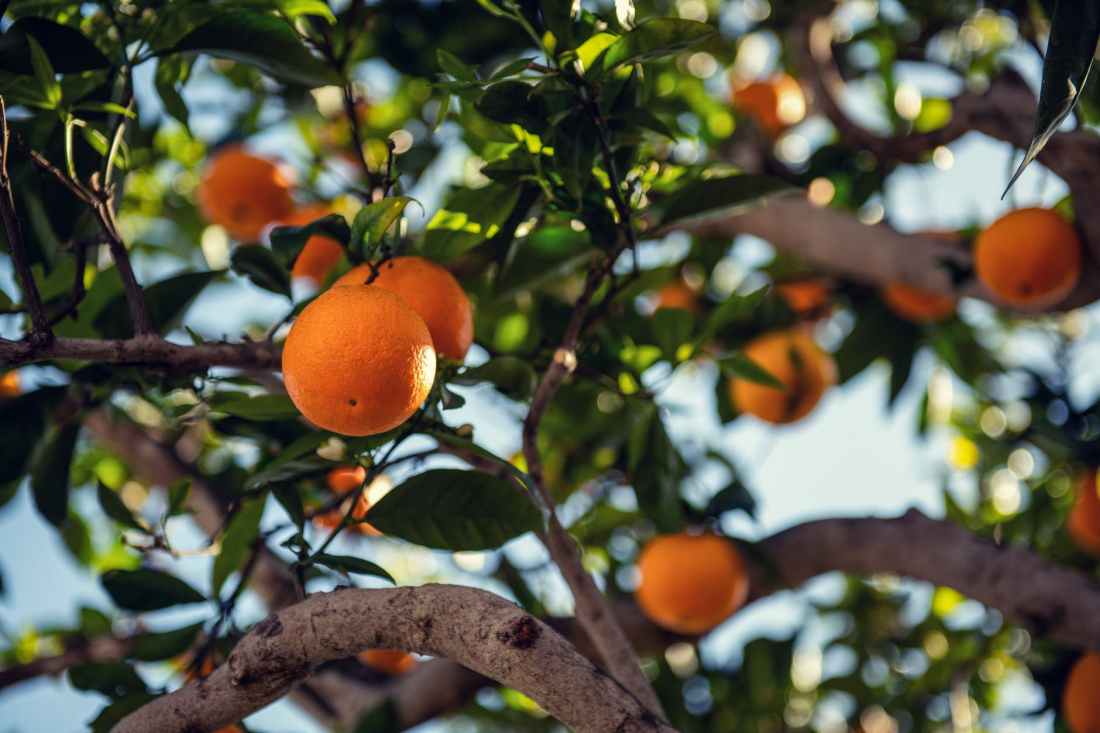
“I love to look at them,” I said. “They make me feel peaceful when oranges are in season. Why do you ask?”

“Because I love to look at them too,” he said. “They are beautiful, but one day in Capitol Park I tried to eat one. It was horrible. I lost my inspiration.”

“I guess oranges can be like people,” I said. “They appear great, but once you get into them they might not be. That doesn’t mean we shouldn’t make ourselves beautiful on the outside. It means we should try to be as attractive with our personalities and souls as we are with our nice clothes. It also works the other way. If you are a wonderful person, dress like it.

“The orange trees in Capitol Park are great. They are old. All the oranges don’t taste terrible though. You just have to keep experimenting.

“I remember sitting with a 90 year old and his wife. They had just picked a plastic grocery bag full of oranges and were eating some. They do it every year. They think the oranges taste sweet. I think if they get any less sweet they would not be good.

“Looking at oranges fills me with inspiration too. In November when they get orange, it gives me hope as the days get real short. I never think of oranges as being anything but sweet. It’s a good thing to think about for Christmas. How to be sweet.

“Jesus was sweet, though we never think of him that way. Oranges are a great tonic for our bitter times and for our city which is home to all the bitterness from throughout the state.

“I wish they’d fertililze the trees so the fruit would be sweet. It would be great to have fresh squeezed orange juice at the capitol a couple of times a season. What pride and class our state would have. Our city would glory in it.

“Were you in a hurry when you ate it?” I asked.

“What?” he said.

“When I see people in the park eat an orange, they devour it, or try to. They are just hanging around the park, then they slop like they have to be somewhere and don’t have time to eat.”

“I wasn’t in a hurry,” he said. “I wanted to sit and savor it, but I was disappointed so I left.”

“I know what you mean,” I said. “A lot of times I’m disappointed when I look at the oranges in December and January. They are bright and still, so peaceful in the fog. I look at them with all my bitterness and long for my peace and sweetness. I sit to make peace with myself as I marvel at the beauty of the oranges. If the sun breaks through, I think how lucky I am and how great life is.

“I think of how lucky we are to live in California. It is paradise. I mentioned that they ought to fertilize the trees to serve juice in the capitol. It would be a great way to celebrate living in paradise.”

“You’re right,” he said. “The weather here is great.”

“We’ve always known that,” I said. “In 1909 somebody in town wanted to start an Orange Day to make tourists from the east aware of how great our climate is. The plan was to plant orange groves in land visible from the railroad and orange trees at train stations.

“People would see proof our climate is mild and that our oranges taste better and ripen a month earlier than oranges in the Southland. We wanted to outdo LA, but the cultural importance of life in California had shifted from the north to the south.

“I did not find out how successful planting with a view for train travellers was. I never saw another notice of Orange Day. I see eucalyptus along train tracks and around stations. Eucalyptus look mysterious and sensual all year. Orange trees only attract when oranges are on them.

“Starting at the end of the 1800s a lot of orange trees were planted in Fair Oaks and Orangevale. In 1930 the Chamber of Commerce planned an Orange and Flower Festival. One occurred in 1931.

“That was when camellias were beginning their run to prestige and popularity. I think between our fame for our trees and the passion of camellia lovers, there wasn’t room for oranges to be glorified.”

“But we still have Capitol Park,” he said.

“Yes.”

Copyright © 2025 by David Vaszko

Elm trees

“What’s the elm bark beetle?” he asked.

“A bug that spreads Dutch Elm Disease on our elm trees,” I said.

“Is the disease what makes the elms stink?” he asked.

“No” I said, “that’s just the way elm trees smell.”

“It really bothers me,” he said, “to walk around town trying to admire the elms, but having to smell the rancid trees.”

“It bothers me too,” I said.

“Why did people in the old days plant them if they stink?”

“You have to remember,” I said, “that in the old days there were horses. People probably couldn’t smell the elms because of the horses.

“Elms have always been a troublesome tree. You can’t plant anything under them because of their shallow roots. They split easy in the wind too. In the 1930s a lot of elms fell in storms because many of the lower branches had been cut. The trees were in saturatred soil because of rain. When gales came the trees had no lower branches to counter the force of the wind against the rest of the tree.

“But the biggest problem with elms is the fungus and the beetle that spreads it. The fungus gets into holes in the tree, then spreads into the vascular system of the plant. This can happen without the beetle.

“The beetle speeds the process. It feeds on the bark of living and growing trees. In winter when elms are dormant, the beetles leave the healthy trees to nest in dead or dying elms.”

“Why don”t they just stay in the healthy trees in winter instead of moving to the dead trees?” he interrupted. “Neither of them have sap.”

“I don’t know,” I said. “I do know that after the male and female beetles breed, the female burrows under the bark to lay her eggs. She does not realize she burrows the eggs in the fungus of a diseased tree. When the eggs hatch, spores of the fungus stick to the young beetles, then stay on them as adults when they travel to healthy trees to eat in the spring and summer. The beetles wound a tree when they eat its bark. If they eat the inner bark, a hole is open for spores to spread from the inner bark through the cambium and into the sapwood. The sapwood carries food and water from roots to the rest of the tree. The spores turn into the fungus. The fungus blocks the flow of water through a tree, then the tree begins to die.”

“At least you can use it for firewood,” he said.

“Only if the bark is removed. Otherwise the beetles hang around the wood pile to spread,” I replied. “We don’t want to be cutting trees down, even though we have to. Did you know that in the old days there were big battles between people who wanted to cut trees and people who wanted to save them and plant more?”

“No,” he said.

“Back in 1913 blocks had thirty-two street trees on them. A lot of business owners cut trees because the trees made the sidewalk dirty and slippery and blocked the lights from the street lamp. The battles between business owners and those who wanted to save the trees go back to about 1900.”

“But weren’t the streets and sidewalks dirty from horses?” he asked. “The leaves are only slippery in November and December, then they are raked up.”

“Well,” I said. “In 1913 Parks Superintendent H. A. Alspach was given a car to do his job because the city was getting too big to cover in a horse and buggy. You’ve got to figure by 1920 horses and buggies were gone. Maybe the business owners felt that since the streets weren’t dirty from horses anymore, it made sense to get rid of the trees so the leaves wouldn’t be a bother.

“It was a tough time for trees at the beginning of the century. They suddenly had concrete and asphalt over their roots and electric wires passing through their branches, not to mention the threat of being cut down as a nuisance that they always faced.

“Superintendent Alspach was ordered to pollard trees that had been butchered when power lines were installed over them. Apparently people really did butcher trees in those days, kind of like the way they destroy mulberries today.”

“But they survived,” he said.

“Obviously they would not all be cut down,” I said. “When the pioneers came in 1848 and the years after that, they destoyed most of the native oaks and sycamores within a mile of the river in Old Town. But like I say, they aren’t all going to be destroyed. There was a native sycamore that was in the county jail yard until 1909. It was cut to make room for the County Court House. It was five feet in diameter. I bet a lot of prisoners looked forward to seeing the grand old tree when they made another trip to jail. They probably told their friends and family about it.

“A big reason more trees were not cut in the first two decades of the century is because people appreciated the legacy of trees that was theirs from the plantings between 1850 and 1880. It is similar to the struggles of the 1930s to preserve trees planted in the 1880s and 1890s.

“During the twenties there was rigourous enforcement of laws against cutting trees without a permit. The punishment was up to one hundred dollars and thirty days in jail. The City had a Street Tree Warden to enforce the laws.

“One time the City did not know whether to prosecute a homeowner or the partners he hired to put a driveway in at the house he was having built. The contractors cut down one of the sycamores the City had planted as part of the City beautification process. The homeowner and the two contractors said cutting the tree was not their fault. The warden and other City officials did not believe any of their stories, so the City prosecuted all three of them. They were released on fifty dollars bail. They asked for a jury trial because they claimed they did not know about the permit requirement.”

I stopped.

“What happened?” he asked.

“I wasn’t able to find out,” I said. “The stories in the paper kept getting shorter and shorter. Maybe by the time the jury reached the verdict the paper had lost interest or decided the defendants had received enough bad press, so that as long as they were given some kind of legal punishment, justice was served.

“In the thirties there seemed to be a lot more removals though, as more trees got old and more automobile related needs came up like gas stations and garages. The City was willing to allow a property owner to cut a palm tree, even if it was healthy, because the park superintendent considered palms to be undesireable street trees.

“There was a war of words in one of the local papers whenever the City allowed another tree to be removed. But the City was planting tons of trees.

“In 1926 between C and I east of 15th, the City planted new trees in the large gaps between old trees. When it planted trees each year, it planted one in front of every occupied property, then expected the occupant or owner to maintain the tree.

“In 1928 the City planted fifteen hundred trees. A thousand in 1930. Throughout the thirties the City planted trees. It put trees in new subdivisions to attract buyers to Sacramento.

“Private groups planted trees too. The Eagles planted a thousand trees a year for ten years.

Ïn 1935, Park Superintendent F. N. Evans said the City had fifty thousand trees in our parks and on our streets. That’s a thousand trees a year since 1875. Figure trees need ten years before they provide shade. Of course the City did not plant all of them, but it took the lead in the twenties.”

“So the beetle hadn’t really begun to take effect yet?” he asked.

“Not for fifty years,” I told him. “The problem back then was the leaf beetle not the bark beetle. It started in 1924. It got to other parts of the state in 1922. It was even worse in Fresno. One year four thousand trees were infected here. The City sprayed for it as best it could each year. One season the City made over thirty thousand applications.

“The problem was that the defense the City made against the leaf beetle by spraying trees on City property gradually lost ground. Beetles from trees on private property re-infested City trees. Either the public did not know or care about the beetle in their private trees. So we had a few tree cutting controversies, massive plantings every year and a disease prevention program.

“The prevention program was dramatic. The City covered people’s houses with canvas so the oil and lead used to spray the leaf beetle and scale would not get on people’s brick or paint or windows.

“A lot happened before the bark beetle came. After the big storm of 1938 blew over hundreds of trees and caused a lot of property damage, people started to complain that the trees were too big. The big trees broke up concrete and kept the sun out of people’s houses. The glory days were ending, though we only know from looking back. In 1941 the City adopted the camellia as the City flower. In 1943 we officially became The Camellia City.

“We kept planting trees, but by the mid-forties the percentage of the City budget marked for trees decreased. In the fifties and sixties new subdivisions were not planted with trees as much and the City did not plant as many varieties of species.”

“It sounds like we were losing our imagination,” he said.

“I agree,” I told him. “The City had all these beautiful trees. Everybody had plenty of money. Between the depression and the war, our desire to be risk free increased. Put the fear of communism on top of the other two and you can see why our imaginations died. It’s too bad. We had the trees the old timers planted for us and the leisure and money they did not have.

“With air-conditioners we did not need trees as much for shade, even though trees helped to reduce the bill. We could have sat out in the morning and evening to admire trees for their shape and sensuality, to see in the trees the life and motion the Indians saw.

“It was time to make a leap of imagination, but we failed to take it. We spent weekend mornings operating a lawn mower. We spent late afternoons and early evenings wondering what we’d watch tonight, or where we were going to drive to see the stars perform.

“There must have been a few people who noticed the trees through the screen door as they turned away from the TV when a commercial came on. The shininess of an alder’s bark or the fissures of the bark of an American Elm might have pricked their curiosity, making them want to rub their hand along the trunk or run their fingers in the fissures. But they were afraid to get up.”

“What about the bark beetle?” he asked.

“I’m not there yet,” I told him. “One of the interesting things about not planting trees in the new subdivisions is that people could see the mountains every day. Their kids would have the same unchanging view of the mountains. It could have been a way to find peace and permanence in a world of incessant change.

“People in the suburbs rejected the view of the mountains like the people in town lost interest in the trees. They kept driving to the mountains to see trees while they polluted the air so they could not see the mountains without driving there even if they wanted to.

“Then in the 1970s leaf blowers became popular. They destroyed autumn, the time of year when even people who are not interested in nature sit in the sun watching the shadows, or on the porch in the rain watching leaves get forced from the tree. The time of year which gets people out more has more days with leaf blowers, driving us inside.

“There’s always going to be people interested in trees. In the 1980s when the elms in the old part of town were getting old and the elm leaf beetle was on the attack, people realized what we have and what we are losing. In 1982 people organized the Sacramento Tree Foundation to plant and preserve trees.

“With the foundation expanding, the elm bark beetle came to town in September of 1990. But the elms are so old it’s a losing battle. If the bark beetles and leaf beetles don’t kill the trees, old age will. The City’s budget doesn’t help. Trees receive only a fraction of one percent of the City’s budget.”

“People are planting trees though,” he said. “So I guess we’ll be okay?”

“Well, as far as numbers of trees and an educated public we will be. Once in a while the City gets State money to plant trees. That’s good too. But the lack of imagination is still there.

“We aren’t planting trees that grow huge like the elms did. We are the City of Trees because of huge elms and sycamores, not zelkovas and ash, though there is a beautiful ash on 7th near Capitol Mall. If we plant trees that grow as tall as the old ones, we will retain our reputation.”

“Didn’t somebody have a funeral for one of the elms in Midtown?” he asked.

“Yes. Why do you ask? It was a wake for the first tree of the year to die of Dutch Elm Disease.”

“That sounds imaginative to me.”

“It is. We need more though,” I told him. “The next step would be to pray to trees, to sing to trees, to have christenings, and marriages and fertility dances under trees. Imagine a parade for miles in town every Spring and Fall where we walk for a mile in silence, then chant or sing a tree song for the next mile.

“We appreciate what trees do for our image as a city. We’re planting trees to cut utility bills. Some people say trees in and around the parking lot keep gas from evaporating on hot days. We know trees are good for the air. They help prevcent erosion. Common sense tells us shade trees reduce people’s irritability.

“Trees are pretty and we like that.

“We have all seen aboriginal art where trees are depicted as muscular and sexual. Science has revealed trees have auras. Knowing that lends credibility to cultures that worshipped trees.

“We have knowledge that wasn’t disseminated in the 1950s and 1960s. I don’t expect us to make trees objects of worship, but we can begin to lust over their power, their form and their sensuality.

“We are at a turning point in our relationship with trees. We can stay in our cars and at our computers, grateful for the convenience of trees to provide us with shade and prettiness; or we can allow trees to be more meaningful to us than our cars and our computers – things we can’t be around enough, like we can’t be in our car or at our computer enough now.

“I am certain we will fail to lust over trees. I am certain we will fail to dream big and plant huge trees for ourselves, our kids and people who live here after us.”

“So the elm bark beetle isn’t that big of a deal?” he asked.

“In the overall scheme of things it isn’t,” I said. “It is to me because it keeps us focusing on the trees we are going to lose even if we treat them, rather than getting all revved up to plant Valley Oaks, Cottonwoods, Poplars, Deodar Cedars, Italian Stone Pines and Eucalyptus.

“It’s sad to lose the elms. It’s sadder to think we are thrilled to plant medium size trees.”

Copyright © 2025 by David Vaszko

Camellias

“Why are we called the Camellia City?” he asked.

“Actually we call ourselves the Camellia City,” I said. “Just like we call ourselves the City of Trees. We’re called the River City because the rivers were always here, and we used to be called The City of the Plain because we are on a plain. People wanted shade so we planted trees and people wanted beauty so we planted camellias. It’s natural that we are proud of our trees and our camellias.”

“That’s an awful lot of names,” he said.

“Maybe that’s why we have an identity crisis,” I explained. “It’s too bad we can”t get our city and county tourist departments; the chamber of commerce; and the marketing, advertising, publicity and public relations communities to make some order out of our names.”

We paused.

“I’ll be happy to tell you what I know about camellias if you want me to,” I said.

He nodded.

“A lot of my facts about camellias I got from a book by F. Melvyn Lawson. I read it in the Sacramento Room at the main library. Camellias came here during the Gold Rush. Because of all the people here, most ot the trees along the shores of the Sacramento were cut by 1853. While the old trees were dying the beautiful camellia was making itself a home. The guy who sold trees at his nursery, James Warren, also sold camellias.

“The camelllia got its second break in 1869 when it was planted at the State Capitol Park. From then on the enthusiasm of camellia growers and lovers got even stronger.

“In 1910 people tried to call Sacramento the Camellia City, but it didn’t catch on. That’s interesting because that was at the same time the neighbors in East Sacramento wanted to tear out the old plants and walls at the cemetery on Alhambra. The cemetery had not been maintained after its heyday between 1855 and 1875.

“While one was falling apart, the other was taking fifty or sixty years building itself for fifty years of glory. A lot of shade trees were being planted too. The difference between the shade trees and camellias was that nobody wanted to cut the camellias down. At the beginning of the century, C. K. McClatchy used to criticize business owner for cutting down so many beautiful old trees that had been planted between 1850 and 1870.”

“But don’t camellias need shade?” he asked.

“Yes,” I said, “but they were always planted in parks or at people’s homes. They weren’t planted in the shade of street trees. So with their beauty, their lovers and no competition, the camellia became Sacramento’s most cultivated and famous flower. In 1941 it became the City’s official flower.”

“When did we become the Camellia City?” he asked.

“In 1943,” I said, “when the Camellia Society promoted the name, although one horitculturalist referred to us as Camellia City in an article he wrote in 1927.”

“I don’t see too much excitement around town about camellias,” he said.

“It’s around. It just isn’t what it used to be,” I said. “Everything has its day. The camellia had quite a long day. From about 1925 to about 1975 were its glory years. So except for just a few years, the camellia was growing steady or riding high from 1855 to 1975. That’s a real long time in the modern world.

“I have my thoughts as to why it is not as popular as it used to be. There wasn’t much winter color in those days. The Sasanqua camellia and poinsettia in December, narcissus in February and the regular camellias in February and March. Now there is a lot of color all year.

“Another reason is that camellias require TLC. People don’t have time to work in the garden or to observe something beautiful. The old school people used to sit in their lawn chair on a sunny Saturday in late winter and watch the blossoms. Then they’d snip them and put them on the dining room table.

“The world has changed. Water became scarce. Plantings that would have gone to camellias now went more and more to drought tolerant plants.

“One last reason I can think of is that between 1960 and 1980, Sacramento lost more of its wide open spaces. The camellia symbolizes civilization. With civilization everywhere, people need wildness. The wild free look is in – poppies and zauschneria.

“But it isn’t important to me why the camellia is not as popoular as it used to be. It is still lovely. What is important is that it was a source of a lot of passion, that it inspired so many people for such a long long time.”

Cottonwoods

“You don’t talk much about cottonwoods,” he said.

“I know,” I replied.

“Don’t you like them?”

“I love them,” I said.

“Well talk about them.”

“Even though they are big and beautiful,” I said. “They aren’t the trees people mean when they say the City of Trees. People think of elms and sycamores in neighborhoods.

“Cottonwoods pretty much grow along our rivers. My favorites are along the Sacramento off of 35th Avenue. So many of them growing tall with all that space for light play fit the wide expanse of river there. Everything is majestic.

“I feel I am in a different world. It’s quiet, especially when leaves flutter in the wind.

“I like to sit looking at the reflections of the trees in the shady water, then to the sky beyond the levee.

“It’s a place to live the moment, sitting with your feet in the water watching the river flow, thinking of your failures as you feel lucky to be surrounded by what is most important. You imagine you see your kids on the other side of the river standing on the levee going off to pursue their dreams, or returning from the big sky on the other side to tell you how their dreams turned out.

“You think of people who came here who couldn’t wait to see the confluence of our rivers. They’d make their way through the cottonwoods, seeing a big bend in the river in the distance, the sleepy trees and brush leaning over the water.

“They’d wonder what was ahead for them, around the next turn, why life is usually lived going upstream, if they would ever learn to flow and go where their power and beauty takes them.

“At the confluence they’d sit together. They’d see water sparkle and light play on leaves and trunks. They would wonder if people could merge like this.

“At night in summer they’d walk through the trees to where the rivers meet, turned on by the shape of the cottonwoods’ trunks. They’d smell damp earth and dry grass. ‘The kids will love it here,’ they’d whisper.

“They’d walk faster, horny from heat and hanging vines, loving crickets and the stars between trees.


“You think of what it must have been like when they saw the water through the trees, how badly they wanted to come together.

“From the edge of the trees they’d sit and talk things over, about what it means to merge, to create something basically like you but greater and more beautiful. All night they’d linger, their future twinkling in the sky. They’d watch water from the mountains ease toward them. They’d let their past flow away in the dark.

“They’d dream of giving everything they have, of being there forever for each other.

“It must have been scary, trusting on something as fickle as nature, knowing that things could not always be contained, that they would surge over the boundaries, that some years one flow would trickle and only one of you would sustain everything.

“There must have been times when they’d wander alone along one of the rivers wondering what happened, grateful for their children, walking until the stars came out, until dawn, when they were as far from the confluence as they’d ever been.

“The strong one left behind would look to the mountains for strength, asking why they all weren’t there with the mountains and rivers and trees – everything you could ask for.

“I ask myself all the time why a freeway is over the confluence, why we call the merging Discovery Park when it’s too noisy to discover love and permanence, things that are most important and we desperately need.

“I think of the weak one wandering back to the confluence, the passion they both felt as they watched the mountains, vowing to be true to themselves.

“They’d think and dream about the kids, knowing time was moving on like the rivers, hoping everybody would age like cottonwoods.

“It’s difficult,” I said, “to feel graceful like cottonwoods when I watch the river flow and see the mountains. My dreams were huge.”

Copyright © 2025 by David Vaszko
City of trees

“Have we always been the City of Trees?” he asked.

“Yes and no,” I said.

“When the pioneers starated rolling in, Sacramento had trees everywhere. People valued the trees for the shade. Remember there weren’t swamp coolers or fans in those days. But they also needed trees to build and to use for fuel. A lot of people who got here didn’t have a place to live. They built fires against the trunks of the trees. That’s how big the trees were.”

“Then the trees fell over,” he said.

“I guess so,” I replied. “I guess property was damaged and people killed or injured when fires finally burnt enough of the trunk so trees fell, or were so weak when the rains and floods came they got knocked over.

“A lot of trees burned in the citywide fires of 1852 and 1854. Between the cutting and the burning, we weren’t the City of Trees we were when we started. The settlers though, needed trees for shade, even if they didn’t need to build anything else and they had a wagon to haul fuel in from somewhere. They started planting trees everywhere.

“I don’t know when we became the official City of Trees. We started getting famous for our trees in the 1880s. When C. K. McClatchy returned from Paris in 1911, he wanted to make us a city of trees like Paris.

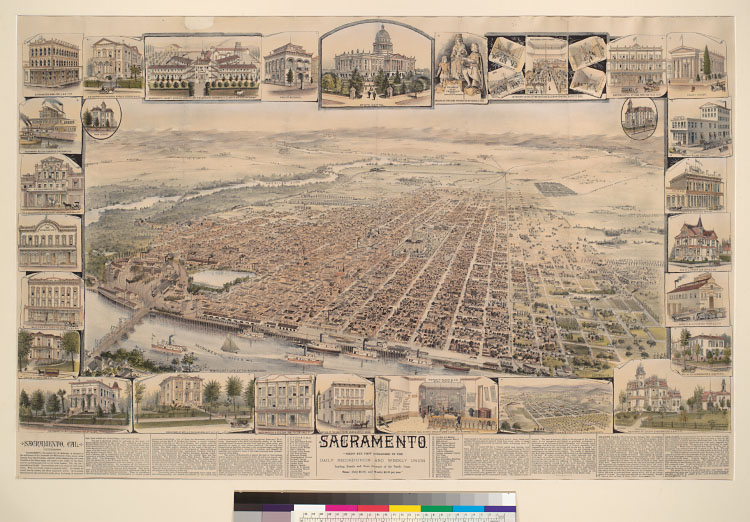
“When I look at art from the 1800s that depicts Sacramento, the name I see is The City of the Plain. It’s a lithograph by George Baker done in 1857. The inscription under the lithograph reads:

A BIRD’S-EYE VIEW OF SACRAMENTO

The City of the Plain

“So he got his image from looking down from the mountains?” he asked.

“I don’t know,” I said. “There weren’t airplanes. Maybe there was a three story building he viewed the valley from.

“What amazes me is his detail. The lithograph depicts the trees in town to be part of an overall tribute to the precision of city planning and commerce on a flat wilderness. Baker has the space between Sacramento and the mountains all flat. More like geometry’s plane than grassland. He considered a plain to be boring, rather than teeming with life like Indians and John Muir did.

“He makes it look like a vast distance of flat to the mountains, but it’s only ten miles to where the hills start in Orangevale.

“It seems to me he never stepped from his office to see the area a few people marveled at. There’s another bird’s-eye view of Sacramento done in 1870. I don’t think Baker did it, but the same sense of emptiness between town and the mountains exist. The two lithographs captured the boredom of the rice fields in the next century, rather than the home of wildflowers and buzzing bees that Muir walked through and lusted over and slept in.

“I like a painting done in 1849 by George Cooper. It has a lot of trees towering above buildings. Through the trees are the mountains. The painting is exciting and mysterious. It makes me think of how neat it would have been to live here and be part of the adventure.

“The lithographs of 1857 and 1870 make me feel that Sacramento would have been a great place to watch the mountains but a boring place to live.”

“Or the sky,” he said.

“What do you mean?” I asked.

“Without any trees, the sky would have been more important,” he said. “People would have been forced to watch it.”

“There’s a guy who agrees with what you said,” I said.

“There is?”

“Yes.”

“Go on,” he told me.

“He wrote an article in a local weekly paper in the 1980s. He said the old timers planted trees so they would not have to see the sky and be overwhelmed by God. I think he was saying that all the talk about God that the pioneers brought with them was put to the test after they destroyed the trees and had to look up and see God go up and out forever. It scared the shit out of them.”

“Kind of like you’re implying the grassland scared Baker,” he said.

“Right,” I said.

“So they planted trees to forget about their fear?”

“That’s what I think he was saying,” I said.

“What do you think?”

“What do I think?”

“Yeah.”

“I think people feared the plains and the sky. The fear they had from crossing the Great Plains and sailing on the ocean they brought with them here. I think they liked the sky at night, but the vast sky in the daytime was too much. It’s too bad. The Sioux saw the prairie as divine. The ancient Athenians loved to look at the vast sky and the ocean from their city. The ancient Irish saw spirits in trees. We didn’t see trees as divine when we cut them or when we planted them.

“We had it all going for us. Except for the fifteen years between 1855 and 1870, there were good sized trees. If you lost interest in looking at the trees, you could walk to the edge of town and climb one to look out at our great grassland and the mountains and peep through a space between branches to the sky. God was everywhere.

“I see God everywhere like the Spaniards wanted to name something after the Blessed Sacrament. The Spaniards didn’t see nature as divine, but they loved God. They were on the right track when they gave us a sacred name. Of all our names – The City of the Plain, City of Trees, River City, Capitol City, Camellia City – Sacramento is our best. What we need to do is adopt a sacred outlook to go with our sacred name. We can pray to our rivers and use the grass under oak trees as places to make love and have a baby.”

“And look up to the sky together when we finish doing it to thank God for life,” he said.

“Yes,” I choked.

“It sounds great,” he said. “How will you get it to happen?”

“I won’t,” I said. “But think of this.”

“What?”

“We can’t focus on rivers or trees because they are right here for us to touch and linger with. We don’t know how to touch or linger. We’re always reaching for the future. A view of the sky and the mountains symbolizes the future. The sky is limitless like the future. The mountains are monumental like we hope our future is.

“You can’t walk to the edge of town anymore to climb a tree to look to the mountains and all that sky between us and them. What you can do though is find a building with a view. If you work in a big office building you can walk out to the hall during break and look to the sky and mountains aching for your retirement. If you’re way up on one of the top floors where you can see the rivers and a few miles of trees too, you might feel magical, that life is really pretty good and your kids will be rich and famous like the mountains and all your grand kids will have a blast playing in our urban forest.

“We’re a city of everything. We always have been. That’s where our potential lies, in allowing everybody a view of what we have – our mountains, trees, rivers, the sky, the valley.

“We have the relatively new justice building. Supposedly the grand view is for the jurists, not reserved for the judges. Our next steps are to move the five floors of our library to the twenty-sixth to thirtieth floors of the newest skyscraper. Then we can have public parks on the roofs of future skyscrapers. Everybody who wanted a grand view could have one.”

“It sounds like you don’t get a view,” he said.

“The only view I’ve had was when I went to Sac State,” I said. “On my way to talk with my professors, I’d stand in the hall if it was winter and look to the mountains. It was beautiful.

“I didn’t think of my future though, of having a cabin in the mountains; a penthouse apartment; a private office with a view from the top. I thought of the past, when the air was clear and there were no suburbs and I could walk all over the valley and up into the Loomis Basin.

“Even in the old days,” I continued, “people didn’t focus on walking. They rode a horse, or on a wagon or buggy, a riverboat or train. Today we ride in cars. Our name the City of Trees would mean more if we walked. We could have a mystical passionate image of our city from walking and wondering, rather than a teenage lust to put Sacramento on the map that we have now.”

“But we don’t walk,” he said.

“No we don’t. It’s too bad because walking is one of the most important things if a city wants to be great or magical. With all our trees you’d think people would be walking around filled with wonder or excitement, but like you say, we aren’t.”

“So how do you get to see everything?” he asked.

“I don’t,” I said. “I take what I get. When I lived in Midtown I’d take the bus to see a friend off of 65th near Fruitridge. It was too far to walk, especially with all the cars and few trees.

“The ride through the old part of town and past Land Park is pretty with all the trees. Then you get to the end of the park and look south to all that sky. On clear days it’s great.

“I loved going out there in February and March when it’s clear and windy. I d get off the bus at 65th. As I crossed the street I’d look to my right and left – the Sierras looming bright white and the Coast Range a dreamy silhouette.

“When I got across the street I’d walk real slow past the cemetery to watch the spring grass blow. I’d stop and look. Then I’d start walking, turning to the sky to the south, then to the Sierras. When I got to the corner to turn off, I’d stop and gaze back to the Coast Range.”

“What about the rivers?” he asked.

“I get there when I can,” I said. “The bus ride through the trees, then out to all that sky and the views across the valley and to the mountains was and is beautiful. I feel lucky.”

Copyright © 2025 by David Vaszko