The President Speaks: Mother’s Day

I want to greet the nation this Mother’s Day morning, as we praise and thank the woman who has given us so much and asked so little. It is this kind of attitude that makes for a civilized country. May we all develop this way of living as our own, so that in whatever aspect of life we are engaged in, we too will give more than we get or ask for.

A lot of women snicker at Mother’s Day. They think it is a ploy for business to make money. They think women deserve more than this. They say they don’t want honor they want power, or they want power along with honor.

There is a conflict between women about what kind of mother is superior – the mother who does not want a career or an influential job in business or government, or the mother who wants to work at a well-paid influential career while expecting her employer or the government to pay for child care?

The conflict is, is the woman, married or single, going to be the adult who spends most of the day with children under five, or is a company’s daycare staff going to spend most of the time with the children? Is society going to trust professional baby sitters more than America’s mothers?

This last question is important because it relates to the commercialization of Mother’s Day. If Mother’s Day is demeaning because of its crass commercialism, why isn’t it demeaning for children to be sent to school when they are two, to have shopping and conformity pounded into them. Those are supposed to be the years of magic and spontanaiety, with hours outside playing and exploring and developing a free independent mind.

In the past the role of the family was to act as a balance to the influence of government and business. If business promoted greed, the family encouraged children to lead a simple life. When the government became oppressive, the family knew it could trust each other.

With the power of business and government increasing, I am suprised that women do not act upon their self-proclaimed wisdom to do everything they can to keep their children away from daycare.

There is another way to look at the issue. Women demand numerous rights.

One right they insist on is not to be told whether or not to have children. But there is no pride to match the rhetoric. If a woman wants to have a child, then she cannot expect taxpayers to pay for her child’s daycare, or a customer to be willing to pay more for a product so she can bring her child to her company’s daycare facility.

America desperately needs its mothers to spend more time with their children, to rise against the constant stimulation and organization of America’s children.

Traditionally we have looked to men to inspire and ingrain children with a love for freedom. These times however, favor women.

It is women, more than men, who talk about freedom and who lust for freedom. Your children need you to light the flame of individualism in them.

America will then reclaim its pride as it celebrates our titans of liberty every Mother’s Day.

Copyright © 2025 by David Vaszko

The President Speaks: Energy

As I stand outside of this new energy efficient industrial complex, I want to thank Congress for its timely legislation. I was never so proud to sign a bill that benefitted so many people throughout the world.

But I also want to thank the owners of this complex, who went above and beyond federal requirements. Not only will this complex produce less pollution than any plant in the world, the products produced here will be some of the worlds most efficient. On top of that, when the product no longer works or you the customer can no longer use the product, it can be easily recycled in a quick and efficient manner.

But what interests me the most about this complex is its architecture and landscaping. It is not beautiful, yet it feels good to sit outside during lunch. One does not moan as one approaches the building like when going to work at most places. Once inside there is no shortage of breathe or an oppressive stimulation of the senses.

When you are inside you feel alive. You breathe deep. Your stimulation comes from feeling good, not defending the assault on your body.

In a sense, this complex is creating energy efficient renewable people that are difficult to wear out. This is a tremendous accomplishment, a world with increasingly less pollution and increasingly more energetic people.

Our natural world will retain and regain its splendors. Americans willl look better and feel better. We will become as beautiful inside as people working inside can. The challenge is to make this beauty endure. Business has to stick to creating superb products and healthy work areas. It must not change its focus to pleasing investors, but must retain its focus on making quality merchandise.

Investors must not seek to get rich quick, or utilize methods to cover up what they are doing with their money. Investors need to think in the long term. Reasonable long term gains expected from an investment in ecologically efficient companies will ensure that an investor’s wealth can be spent in a world that is a pleasure for an old person to live in.

I have great faith that business leaders will continue to rise to the occasion. I am not so certain of our investors. That is why I try to persuade them to have restraint.

This is a new era for the nation. Seldom is the working person presented with a work environment like what we have here today. There will be more of these environments, ushering in a new sense of happiness and optimism.

It is important for Americans to build upon this happiness and optimism, to share the good will their bosses are exemplifying. The new sense of relaxation, health and constructive stimulation can do wonders for individuals, famlies and the nation. Everyone must let these benefits take root.

It might be tempting to abuse the good will of the employer by calling in sick like you have always done. Now that you feel better, it is important that you mature so that the nation comes to feel and be as good spiritually as it does physically.

Our environmental crises is also a social crises. In addition to businesses cleaning up the environment and making work a healthy place and no longer a nightmare, the American citizen must do his and her part to rid themself of the bitterness and mistrust that has plagued our nation for so long.

Spend more time talking with each other now that you are not stressed and the grounds around work and the rest areas at work are conducive to conversation and mental health. With less stress and more healthful stimulation, you can discard your old habits of being busy and acquisitive.

You can begin to show the faith in each other and consequently the nation, that more and more employers show in you. Where employers are more willing to give up absurd profits, Americans need to stop buying so much and be content with much less. When you do this, you will have less of a sense of self-importance and be more willing to see others as friends rather than as threats or someone to outdo.

This faith in each other will be the bedrock of a great new America.

We are not great now.

If we rid ourselves of our toxicity, then thrive on healthy stimulation, we will develop good habits that we can vow to keep even when times become difficult. For it is the average American, not business or government, that determines our character.

Copyright © 2025 by David Vaszko

The President Speaks: Sexual assault awareness month

This evening I would like to address the nation regarding one of our most frightening problems. The problem is rape.

I know this is a sensitive topic for almost every woman. Women fear to walk alone at night or to be in a park alone in daylight.

A lot of people wonder why so many men rape. To some people rape is an example of the violence of Capitalism manifesting itself in our shopping areas and neighborhoods.

Other say that men are over-stimulated by pornography and sex in the media. Because they cannot realistically live a fantasy, their rage creates nightmares for women.

Another point of view is that since men are psychologically weaker than women, men are more likely to become psychotic or feel powerless in our increasingly alienating society. Rape makes rapers feel powerful.

This is where I want to take off from.

Men, generally do not feel powerful. There is nothing for millions of young men to do. Most of our talk of empowerment is intended for females.

There is no encouragement for boys and men to feel empowered, that is, powerful and confident. Boys are preached at to not disrespect girls, not to treat them as sex objects.

Yet girls are not reprimanded for the macho behavior so many girls exhibit. Girls are told they can be as sexual as they want at whatever age they want.

Girls are never told to dress modestly to prevent boys from becoming aroused and then aggressive. They are not told to be modest so boys have respect toward women and female sexuality.

Boys are told boys are the problem. Boys are told that by nature they do not, but ought to, respect women and girls.

Since the 1980s men at work and in college have been told they are potential rapists. Well-educated influential and powerful women preach about a culture of rape.

Preaching about a culture of rape breeds fear. Women who were cautious become terrified. Women who loved to go places alone stop going.

The women who feel the most empowered in America today are those who preach this culture of rape. If there had been no feminism,, they would have built a career talking about an epidemic of burglaries or the need for a huge militrary to fight terrorists.

Their lust to make others afraid has been successful. They’ve made young women afraid to trust men, but to depend on feminists. They have established laws that a man can be accused of rape or harrassment without evidence.

Men fear being charged with a sex crime they did not committ. Men are ashamed to smile at a woman or appear confident around women.

What used to be an expression of good will becomes a sexual advance. What used to be an act of courage is no longer considered the first step in a possible romance, but something that violates a woman’s privacy. That is why men feel disempowered and weak.

It is not surprising that rape is prevalent. The revenge that feminists seek on men is reciprocated by rapists seeking revenge on women.

I want my listeners to think for a moment. Suppose there is a frustrated angry man that is eager to lash out at a woman.

Suppose he hates what is boiling in him. Suppose he decides, “I need help.”

He wants to go to a counselor to talk about his sick desire. If he approaches a counselor, the counselor will call the police.

The police will arrest him. He will have a global positioning chip implanted in him. His photograph and name will be posted on the web.

He will be known all over the nation as a potential rapist. What should be praised as an act of common sense, courage and wisdom is turned against the man. Instead of moving forward he is forced backwards.

It is important if we want rape to end, to allow men to have more power. Work offers few opportunities to be powerful or feel powerful.

The place for men to feel powerful is in the home. The behavior of children, especially sons, must become the responsibility of the father.

But fathers are in a dilemma. They are told there is violence against women. They are told a child must not be spanked or hit because that is child abuse.

How are young men going to be respectful if they are raised without a father? If they have a father, how can they not help but be disrespectful if they and their fathers know that the father will not discipline them because he fears to be arrested for child abuse?

It is acceptable to accuse a man of a rape he did not commit and to label men potential rapists, but it is not legal to hit one’s obnoxious bullying disobedient child. This is not right.

I asked earlier why men commit this horrible crime. I do not think it has happened in a vacum. In the 1960s America’s middle class and upper middle class young people claimed that there was nothing immoral about their promiscuous lifestyle.

In the 1970s homosexuals were more promiscuous than the hippies. Homosexuals claimed to have a right to be promiscuous.

A snowball effect occurred. One could be permissive with each gender. An unmarried nineteen year old woman had no qualms about having a baby she could not support. One could have a sex change operation if one felt inadequate.

It makes sense. If so many groups were proud of their selfish lifestyles, then a warped man is going to have no qualms to do what he feels like doing.

We have to change society’s attitudes towards sex and violence. Abortions should be discouraged. Promiscuity must be looked down upon. Hollywood and the media must stop glorifying sex and violence. Homosexuality should not be glorified. Bisexuals need to be labelled wish-washy. A woman’s sexual freedom must end when she expects the government to pay for her baby.

What about properly convicted rapists? Jail them. Offer them no sympathy.

Most of you have heard the phrase No name. No shame. No blame. It applies to females who want to avoid responsibility for their fetus, or who feel they might hit their babies.

We need something like this for men who are in a rage and who are willing to try to stop their rage from causing violence. There must be counselling for men so men can express their pain, their horrible thoughts, feelings and desires without being reported to the police or presented to the media.

A final thing. Though feminism as a term is not dominant among young people, the influence of feminists remains stupendous.

Every man is perceivced by feminists to be a potential rapist. Consequently every man can be accused of rape under false or flimsy allegations.

As long as feminists write family law and rape law and set the agenda of what will be taught in schools, there will be the fear and shame and rage that causes men to rape. There will also be a fear of being raped that is blown out of proportion by women who love women and men to live in fear.

Good night.

Copyright © 2025 by David Vaszko

The President Speaks: Opening Day

It’s a thrill for me to be throwing out the first ball today. Though I am as cold as the rest of you, we are all warmed by the promise of the new season, the hope that springs eternal in our hearts.

Baseball, more than any sport, inspires hope. I think this is because there is no time limit. No matter how far behind you are, with skill and courage and a lot of luck, you can still win. Time will never run out.

This feeling that time will never run out is part of the season. Days are getting longer then stay long. There are no worries. We feel the future will always be like this, that there will always be youth, there will always be heroes and there will always be another season to improve our talents or finally use them to their fullest.

When Fall comes we see players in a different light. Rookies look even younger. The sparkle in the veteran’s eye is one for the ages. Long shadows on the field have us dreaming of next year’s glory or cheering the end of an era.

On this bright chilly day a new year is about to begin. We step out of the shadow of winter into this beacon we call baseball season.

It is my pleasure and honor to throw out the first ball.

Copyright © 2025 by David Vaszko

The President Speaks: Infrastructure

Today we Americans look forward to the future with more hope than in recent memory. The bill that I have just signed, our new Infrastructure Project, is not earth shattering in terms of ideas. None of our plans had not already been practiced somewhere. But the bill is momumental because so many things are going to get done that have needed to be done for many years.

When people talk about infrastructure, they usually mean highways, railroads, waterways and airports. I will talk about these.

First though, since we live in an age of communication, I will speak about communication. Because of the importance of computers and television, access needs to be available to everyone.

The Federal Government will assist married couples and single people earning less than the standard threshold. The government will pay for a satellite dish, cable TV hookup and internet access.

In the past, many rural areas and all poor school districts had no access to cable television or the internet. Now the Federal Government is requiring cable and internet providers to serve rural areas. For poor school districts, the government is funding computer labs at all the schools.

The government will assist schools in other ways. Local school districts will continue to pay for academics. The federal government will fund music departments in middle schools and high schools. Treasuries will be sold to finance career programs and manual skill programs such as computer repair, graphic arts, electrical repair and woodshop.

Treasuries will also be sold to construct new hospitals and to expand and refurbish existing ones.

Communication, Education, Health. These come first. As part of our health policy, in addition to the program for hospitals is a program for drinking water. Pruification plants will be constructed in all the parts of the country where water quality is not as high as it was.

The quality of air has also been targeted for improvement. All airports will be connected to their urban center by a lite rail system. Rail service on Amtrak will be greatly expanded.

Though we need to reduce our dependency on the automobile and the pollution it causes, we cannot not pollute. We can only make pollution less bad.

We wil upgrade our railroad right of ways so trains run smoother and faster and use less fuel.

Now here is one part of the bill that caused controversy. The bill has arranged for the construction of six new oil refineries: two on the east, west and gulf coasts. The facilities are planned to be several times less polluting than older refineries. The benefits to the nation in terms of supply and price of gasoline will be great.

But it isn’t just the money saved and the convenience of not worrying about running out of gasoline. The vision for the refineries shows that we are finally brave enough to say we will do something about our overall decline in manufacturing.

While the refineries are being constructed, highways will be improved. Americas bridges will be made sounder. For those who live along interstate and U.S. highways, sound walls will be constructed to keep noise out of neighborhoods.

Like those along freeways need to be protected from the noise of traffic, those who live along rivers need to be protected from floods. Levees will be upgraded with federal funding.

The last area I want to cover is the technologies that were introduced in the 1970s and 1980s. The federal government is providing funding for solar panels on new buildings. This will reduce the need for non-renewable forms of electricity and allow for smoother operation of our electrical grids.

On federal lands, wind turbines wil be installed to generate electricity. With the fear that droughts will increase, this was a necessary step.

In closing I am grateful to members of the house and senate who worked tirelessly on this bill. I also want to thank those in industry, government, business and academia who provided their expertise.

These projects that I have described should make us proud that America is back on track, that after so many years of unnecessary war, we are beginning to do what we should have started thirty years ago.

Copyright © 2025 by David Vaszko

The President Speaks: President’s Day

I greet you my fellow Americans on this holiday that merges the birthdays of our two most famous presidents.

What is interesting is that one president owned slaves while the other freed them. One was born with good connections, making better use of them than anyone expected, while the other, of humble origins, believed in then achieved the American dream.

Each of these men sacrificed for his country. One commanded and led an army, risking death continually to create a new nation. The other also commanded an army, seeking to preserve what the first president helped create.

As cynical as our times are, we must not lose sight of their greatness. Washington wanted no compensation for all of his time and the risks he took.

Lincoln, perhaps not pure in his decision to free slaves, was pure in his conviction that Americans show no animosity to each other after the war. He was a healer in the spiritual meaning of the word.

It is this spirituality that made America great. Washington could not have done so much for free without the religious values Puritans brought to the continent. Lincoln could not have dreamed of being president and also of doing something great for humanity without his unshakeable faith in God and the knowledge that he could turn to The Bible for inspiration, wisdom and catharsis.

This is important, for when people say there must be a separation of church and state, they usually mean religion is dangerous and should not influence politics. That isn’t how our Founding Fathers saw it, how Puritans saw it or how Lincoln saw it.

The Puritans, who I admit were highly opinionated, believed that politics ruins religion more than religion ruins politics. They believed people should live their lives exemplifying the best in religious principles, and that they ought to religiously watch and act to prevent government from dictating what moral principles will be followed.

Our Founding Fathers admired the Puritans. They knew it was the Puritans who provided the spark for liberty the patriots inflamed, and they knew the spark for liberty came from religion not politics.

What the Founding Fathers may not have known is that the fire that burned so bright in the Puritans was fed by belief in the Second Coming, that the patriots were using the energy from that conviction to start a rebellion and create a nation.

It was this nation Lincoln felt he had to save. He knew the nation’s principles were not created by men but by God. Lincoln knew too that he was serving God and giving a new life to those who had been denied by men the freedom God gave them at birth.

In our cynical times we look past lofty principles. We look for hypocrisy.

We say Washington owned slaves so he does not deserve respect and cannot possibly be a hero. We say Lincoln originally felt black men to be inferior, so his first thought must diminish his decisions to free slaves and reunite the nation.

My countrymen, our cynicism makes us an unhappy and uninspiring country. Our lust to label someone a hypocrite reveals how little we believe in ourselves and how naive we are not to realize that greatness and goodness are not going to be perfect.

Our hypocrisy watch also shows the world how foolish we are. We would rather blindly reject a hero because of his bad points, than blindly assume our hero could do no wrong.

With this attitude we cannot be great again. We need heroes to inspire us so we can make the changes America needs to make.

Two changes are to stop suing and stop being promiscuous. These acts could lay the grouondwork for truly heroic acts like opposing the Patriot Act and our police state.

We feel we have the right to sue. We think we are free when all barriers are dropped in our sex lives. Unfortuneately, this self-centeredness keeps us from worrying about freedoms far greater than these: such as not being watched by police and having no fear of being arrested for something we said or something we might do.

There is nothing heroic about lusting for a lawsuit or the seduction of strangers. There is everything heroic about complaining police have too much power and laws need to change so we cannot be arrested for our opinion or our appearance.

Most Americans have no position of power to do something like Washington or Lincoln did. Yet as a nation, if we have courage and wisdom we can act heroically.

A characteristic Washington and Lincoln had to complement their ambition and vision is restraint. Our nation has ambition but no vision. Most importantly we have no restraint.

It is our lack of restraint that makes us cynical of true heroes. It is the lack of restraint that makes us glorify false heroes.

We need to stop being slaves to our worst passions. We need to seek once again to be a free people, to risk our lives for the freedom God gave us.

We must honor our greatest heroes. We must fight for and exemplify true freedom. We must be the shining star for our grand children that the Puritans were for the Founding Fathers and the Founding Fathers were for Lincoln.

Copyright © 2025 by David Vaszko

The President Speaks: The economy

This evening I would like to talk about our economy. As most of you know, whether our economy has been booming, stable or on a downturn, we Americans have been spending too much money. Our spending has become so acute, we have gone into debt.

Basically, our debt is in two parts: the deficit the federal govcernment creates by selling bills and bonds and notes, and the balance of trade deficit American consumers and businesses create by spending more than they save and buying more than they produce.

The federal government has a choice to not spend more than the amount of taxes it receives. If a shortfall is expected, three things can be done: taxes can be raised, programs cut or money borrowed by selling treasures.

The least desireable way to raise money is to sell treasuries. This is true even if the dollar is used as the world’s main currency and interest rates are low.

There was a time when selling treasuries was good for America because mainly Americans bought them. But today most Americans have no savings.

Too many of our securities have been purchased by foreigners. Selling securities makes it easier for the government, usually upon the whim of a president, to start a war taxpayers do not want to fund, always against a weak opponent posing no threat to America.

It is no coincidence that as we have been selling securities to fight unnecessary wars, the infrastructure of the country has deteriorated. What is really necessary, the improvement of our infrastructre, has been denied funding. What is really unnecessary, wars against weak opponents, has received lavish funding.

Upon taking office, my administration has ended our childish wars. You the taxpayers are paying off these bills. This is the first step toward improving the economy. The second step toward improving the economy is to sell securities to repair and build roads, sea ports, airports, railroads, bridges, schools and hospitals. At first, the securities will be bought mainly by foreigners. But as our infrastructure and economy improves more American will have the money to buy securities and also the money to pay taxes to finance our infrastructure.

Because we need new infrastructure does not mean we should look forward to shipping frivilous products on our highways or to hurrying down a faster road to the mall. Our improvements are intended to encourage new industry so we have more to export and need to import less.

Improved schools provide talent industry needs. Improved roads decrease the cost of shipping and the amount of time in storage. Faster communication means mistakes are less costly and new ideas can bring profit faster.

With this efficiency and the enthusiasm that goes with it, I hope we will produce more than we consume and as individuals save more than we spend. It is also my hope that within ten years we will have a trade suplus. That means that if an emergency occurs we will be able to afford a tax to pay for it. It also means that if we need to issue treasuries, the treasuries will be purchased by Americans.

I have not mentioned what to do with our savings besides using them for a national emergency. There are also personal emergencies.

And too, there are people who are eager to buy homes and to start businesses who need to draw upon the savings of others. The more we have saved, the more we can loan each other and the lower interest rates will be.

But personal savings alone will not be enough. When companies profit, it is better to give raises to employees and pay dividends to stockholders than to needlessly expand the company, invest outside of a company’s expertise or to speculate on foolish investments, for consumer purchases account for 2/3 of our economy.

I want to end saying that we are making great progress in eliminating the federal deficit and that the government has responsible plans for the future. I sincerely hope that businesses and consumers pay off their own frivilous debt while practicing a similar restraint and concern for the future that we in Washington are seeking to do.

Copyright © 2025 by David Vaszko

The President Speaks: Inauguration Day

As I begin my presidency, I want to thank you, the nation, for putting your trust in me. The risk is tremendous. I can think of no president disliked by the powerful and the wealthy as I am.

You have spoken. You had courage to finally vote for a candidate with the pride to say what needs to change. You realized that playing it safe by not voting for someone outspoken has limited your freedom, made you afraid and increased the distance between what the upper classes have and what the middle and lower classes earn.

I expect my presidency to be a successful one. I have always believed politics to be a noble endeavour and that there can be nothing more noble than a dynamic president fulfilling his oath to the constitution and the people of this nation.

America, I feel, is in a crisis as great as the Civil War and as great as the Depression. We too are in danger of civil war. We are in danger of a depression.

But our greatest crisis is our lack of civil liberties and the fear and mistrust we Americans have toward one another. If we had more civil liberties and were not under surveillance, perhaps our fear and mistrust of one another would decrease. I will do my best to put the fear into our police beauracracies that they put into you.

I will need your support when I do this. While I am pushing for a more free America, the America Jefferson hoped would evolve into and Lincoln died for, you need to be trusting each other more, fearing each other less, telling congress the Patriot Act and Department of Homeland Security must be abandoned.

You must be less greedy. You must engage each other more, demand your children be free thinkers and not consumers of fashion.

Our times are times of fear. America progressed from a theory of liberty in the 1700s to laws of equality in the 1800s. In the 1900s ours was a Golden Age of Prosperity.

It is our prosperity that makes us fear one another, that allowed us to be duped by leaders. When you voted for me, whether you knew it or not, you admitted prosperity has made Americans soft, that we are slaves to our worst passions, that now you want to be free.

I believe in freedom more than anything. It kills me we have so little of it and did not mind watching it erode. I hope I, you, we have the courage to continue this great risk my election symbolizes, to if necessary, pay the ultimate price.

Freedom means that those who have it live the divine spark each of us is born with. We have lost that spark. Now we will fight to regain it.

I pray we succeed, that this age of fear becomes an age of wisdom and freedom, that we are beginning a golden age of rapport, courageous activism and unshakeable faith in our future.

Copyright © 2025 by David Vaszko

Cottonwoods in May

“What do you think pioneers thought about the cotton that Cottonwood trees release every year?” he asked.

“I think they worried about cholera and malaria so they did not think about it one way or the other,” I said. “If they had an allergy like I do, they probably weren’t as concerned about it because survival was so important. Something like an allergy was probably easy for them considering all they went through.

“After trees started being planted in the 1850s to replace all that had been cut down, we were leaving the pioneer stage. Then levees were built, the city raised and marshes drained. By 1857 we had grown astronomically. We were a real city.

“As we grew and we had more comforts, people began to complain about dripping sap and cotton puffs from Cottonwoods. The main reason they could complain was that trees they had planted to provide shade had grown quickly. The old part of town is on the flood plain. Soil then was fertile because of silt.

“I guess they didn’t want sap dripping on their buggies or cotton puffs blowing onto their porches and around their house. Now that survival was not as important, they could be picky. I guess the terms they would have used if they were alive today is that the dripping sap would cause their buggies to depreciate faster and cotton puffs blowing all over their porperty would bring its value down.

“But something I thought of now – their kids. The kids became adults in the seventies and eighties. Everyone knows the Pilgrims’ kids weren’t as tough as the Pilgrims. The same was true for the pioneers’ kids. They probably complained all the time of their allergy.

“A couple anti-cottonwood ordinances were passed: one in 1874, then one in 1896 as the city expanded.

“But you can bet there were people who didn’t care about sap on their buggy or cotton all over the place. They probably sat on the porch during May, whenever they had time, to watch the cotton puffs blow.

“They were grateful for having survived. They’d watch the puffs drift thinking of the floods, fires, malaria, cholera, violence and corruption they saw. Then they would dream about their kids, hoping the kids would do well and stay alive.

“There were probably days when a clump of tufts drifted all over them. They’d wait till it blew away from their eyes so they could watch more. They loved having it in their hair and all over their clothes. If the kids were still small or they had grandchildren, they’d invite the little ones over to play with the cotton and each other’s hair.

“Sometimes they’d get antsy and walk to the fence to lean on it, to watch all that white sailing into the blue. They’d gather up whoever was around to drive a little ways to lighten up and get giddy as they laid in the grass in its last little bit of green.”

“What about their allergies?” he asked.

“It’s a question of imagination,” I said. “I can accept the argument that there were so many Cottonwoods that new plantings were made illegal. In those days you could just walk a short way to the country or the river, depending on whether you lived on 12th or 4th Street. You could see Cottonwoods there.

“Sutter’s Fort had a lot of Cottonwoods. Imagine watching cotton puffs blow up against the walls and thinking just thirty years ago the fort was the center of activity in the wilderness. Imagine Sutter up at the Feather River in the Spring of 1850 watching cotton puffs drift, feeling an emptiness in his stomach that the charmed land he owned had blown away like a dream on a March cloud.

“What bothers me about people who say Cottonwoods bother their allergy is that they don’t look for the one or two days when the puffs don’t bother their nose, or at least not as much. On those days I wish they would shout for joy and say we are blessed to have these beautiful graceful things.

“You hear a lot about letting go. We’ve got to slow down when we have our allergies. We’ve got to let go for that month and deal with it, look to the sky and puffs and say it is worth it.

“The same with the dripping sap and eucalyptus bark and slippery pine needles and messy Autumn leaves.

“Every tree has its beauty and a lot of trees have their inconveniences.”

“What did the Indians do?” he asked.

“What did the Indians do?”

“Yes.”

“They danced a lot,” I said. “In February they had a dance for spring clover. In April they had a dance for spring flowers. In early Summer they danced for the first harvest. But as far as I know, they didn’t have a dance for Cottonwood puffs.

“A lot of people who like the cotton puffs think of the puffs as freee and symbols of freedom. So you could ask why people like the Indians who were so free didn’t celebrate their freedom with a religious dance to the cotton puffs.

“Indians took their freedom for granted. They probably didn’t know they had it till the pioneers took it away. It’s like us not appreciating our consumer stuff until we are broke or there is a power failure. You could ask why we don’t pray to blinking lights on radio or TV towers to thank them for the passion, inspiration, realization, love and resolve the great music of the world brings us.

“What was great about the Indians is they had a civilized life. They sat around a lot. They laughed. They talked. You can bet they spent a lot of time watching cotton puffs blow and loving every minute of it.

“When I watch cotton puffs I think of all the things I have never done, all the things I want to do, all my constructive passion I’m not releasing. I don’t think Indians had that problem.

“When I saw the film at the State Indian Museum, I loved listening to the women chant and seeing the panoramic views of our beautiful state. One of the things the narrator said was that the women sang these lovely songs while they were making baskets, that making baskets was a joy, not drudgery like factory work done by white people. Well, it would have been great to see cotton puffs drift along on the screen while the women sang and the Sierras were shot exquisitely.”

I stopped.

“You know the U.S. Bank building dowtown? The one next to the library?”

“Yes,” he said.

“There’s a set of murals in the lobby. They pay tribute to Sacramento based on the themes air, earth, fire and water. The one I love is air. It shows the confluence of the rivers with our skyline in the background. On the left are little boys blowing bubbles on a windy day. The trees are windswept. In the middle of the painting is a teenage girl leaning sensually with her back against a tree and her head and long hair thrown back where the trunk bends. She has her eyes closed dreaming while one of the boys is gawking at the big bubbles floating away.

“It’s a magical day, like the way I feel in May when wind blows cotton puffs.”

“There’s no cotton puffs in the painting,” he said.

“It doesn’t matter,” I said. “The painter understands Sacramento – the dreaminess and wind in April and May. Bubbles are more effective than if he used cotton puffs.

“Why did you ask me about them?”

“Because an old girl friend told me that when she was a few months pregnant she always went to the river to watch the cotton puffs.

I was afraid, she said. I’d sit with my feet in the water crying as I watched the cottony stuff drift. They scared me. They were free. I wasn’t. But they gave me hope because they were magical and beautiful.

“I didn’t know how to tell you so I mentioned the pioneers. I know you love the old days.”

“Did she love Sacramento?” I asked.

“No. She didn’t know the names of any of the trees either.”

Copyright © 2025 by David Vaszko
Catalpas

“It’s a great name isn’t it?” I told him.

“What?” he asked.

“Catalpa.”

“Are those the one’s with the gray underside of the leaves that flutter when it’s windy?” he asked.

“You’re probably thinking of Cottonwoods and Poplars,” I said. “Cottonwoods grow along both rivers. There were beautiful Poplars outside the theater building at Sac State. I loved to watch their shadows on the wall in winter when the leaves were gone.”

“Where are Catalpas?” he asked.

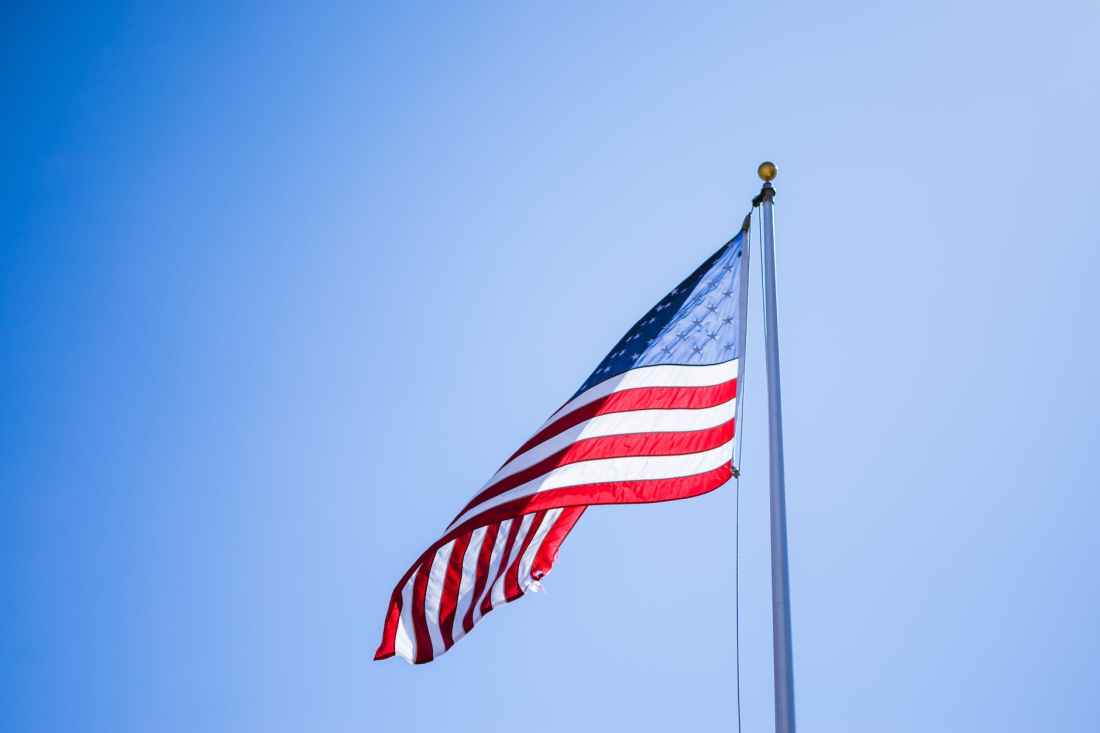
“They’re scattered around,” I said. “There’s one at the theater in William Land Park. If you’re sitting in the back look over to the right toward the beautiful garden. It’s on the other side of the pine tree. You can tell by their big heart shaped leaves and the long pods that get hard and brown in Autumn. In Spring they have white bell shaped flowers, but the flowers only last a month. You can easily miss them. You can’t miss the leaves or pods though, the way they hang and droop. Their hanging and droopiness fit our hot summer days.”

So that’s why you like the name,” he said.

“Yes,” I replied. “It’s lazy and lingering like the leaves and pods and our summers. They droop closer to the ground than most trees. I like to walk under the tree brushing the leaves away to lie in the shade.”

“How come there aren’t more of them?” he asked.

“Well, they don’t grow tall,” I said. “Another reason is their long pods. I guess people felt the pods are a nuisance when they fall on the ground.”

“But people planted a lot of those trees with rough round balls that fall all over the place,” he said. “I lose my balance when I step on them. They’re not the best thing for my lawn mower either.”

“You’re thinking of Liquidamber,” I said. “People planted them because they grow so tall. Sycamores have balls too. They break a lot of times when people step on them. If Catalpas grew tall, we would have a lot more of them on the street and around public buildings. They are good for yards because they shade the house without people worrying about huge limbs or a giant trunk falling on the roof or a neighbor’s roof.

“They aren’t stately like Elms or Sycamores. Between the need for huge trees in the days before air-conditioning and our image of being strong and refined like our Midwest and East Coast background, Catalpas didn’t dominate.

“Their leaves are sensuous and erotic. If we plant Catalpas like old timers planted Elms, our city will have a different feel to it.

“I think of how relaxed I feel when I look at their leaves. Imagine how different we’d feel stepping outside to look at those big heart-shaped leaves waiting to be touched. They’d take the edge off of the stiffness of our houses and offices,” I said.

“Or maybe,” he replied, “when we looked at them we’d realize what kind of places we really have and how afraid we are to touch. Maybe we’d cut them down to plant Elms or Sycamores again.”

“Maybe you’re right,” I said. “Maybe feeling stately is more important to people than touching a leaf to satisfy or intensify a curiosity or a passion.

“Catalpas are great for children. Kids love to touch. The leaves and pods are right there for little people to grab. The pods and leaves seem huge to me. They must seem even bigger and more fascinating to children.

“I love wallking through the park at night in Fall. It’s the first time in months that sprinklers are not on. When I’m looking at the ground I stop when I see a huge Catalpa leaf in the light from the street light. I pick it up like a little kid and place it to my face.”

“Then what do you do?” he asked.

“I hold it to my heart. Then I kiss it and let it go.”

“You really kiss it?”

“Once in a while,” I said. “Sometimes nature makes me reverent. Think how different we would feel about our city if trees made us feel reverence. We probably wouldn’t brag about being the City of Trees. We might have an unspoken law that crimes are not committed where trees are. Think if we could wander along the rivers and hang out in our parks without fear. If we were fearless to match our love of trees, we would feel as beautiful as they are. Wouldn’t it be great to feel that beautiful? If we were not afraid of each other and if we were not afraid of ourself, then our trees would be different to us.”

“We would move slower,” he said. “And the word Catalpa would sound even better.”

Copyright © 2025 by David Vaszko